


Perimenopause Cycle Syncing 101: A Beginner’s Guide to Adaptable Yoga Routines

If you feel like your body’s rulebook was rewritten overnight, you aren’t imagining it.
Maybe you used to have a predictable 28-day cycle. You knew exactly when you’d have the energy for a heavy lifting session and exactly when you’d need to curl up with a book. But lately? The rules have changed. Your period might show up two weeks early, or vanish for three months. Your energy levels feel less like a predictable wave and more like a chaotic weather map.
Traditional cycle-syncing advice tells you to plan your workouts based on where you are in your monthly cycle. But for perimenopausal women, that advice can feel like a cruel joke. How are you supposed to sync your life to a cycle that refuses to play by the rules?
At Capacity Conscious Yoga, we believe there’s a better way. It’s called Capacity Syncing. It’s about learning to listen to what your body is telling you right now, rather than what an app says you should be feeling.
Why Traditional Cycle-Syncing Fails in Perimenopause
The idea behind cycle-syncing is beautiful: honoring the hormonal shifts of the follicular, ovulatory, luteal, and menstrual phases. In your 20s and early 30s, this is often a steady, rhythmic dance.
But perimenopause is different.
Estrogen doesn't just "drop", it fluctuates wildly. Progesterone begins its slow exit. This hormonal rollercoaster means your "ovulatory" phase might come with zero energy, or your "menstrual" phase might actually be the time you feel strongest. Following a rigid 28-day plan when your cycle is 42 days (or 21 days) only leads to frustration.
It makes you feel like you're failing at "wellness."
The truth? You’re not failing. The system just wasn’t built for the beautiful complexity of the perimenopausal body. When you try to force a "High Intensity" workout because your calendar says you’re ovulating, but you actually slept three hours because of night sweats, you aren't building health. You're building burnout.
You can read more about why your 20s workout strategy is a disaster for your 40s here.
The Solution: Capacity Syncing
Instead of looking at the calendar, we look inward. We use adaptable yoga routines that meet you exactly where you are today. This isn't about giving up on your goals; it's about shifting the goal from "crushing it" to "sustaining it."
We categorize movement into three energy levels: LOW (Rest/Restore/Reset), MEDIUM (Steady), and HIGH (Expand).
By identifying which level you’re in before you step onto the mat, you ensure that your movement supports your hormonal balance rather than disrupting it. This is the heart of yoga for perimenopause.

The "Capacity Check In"
Before you choose your practice, you need to know your "Capacity Score." At Capacity Conscious Yoga, we suggest a 60-second "Capacity Check In."
Ask yourself:
How did I sleep? (Be honest, did the "perimenopausal brain" keep you up?)
How is my physical tension? (Are your joints achy? Is your jaw clenched?)
What is my mental bandwidth? (Do you have the focus for a complex flow, or do you need to be led?)
Once you have your answer, you choose your path. No guilt. No "shoulds." Just supportive movement.
Level 1: LOW (Rest/Restore/Reset)
Focus: Restorative yoga for fatigue and nervous system regulation.
There will be days, many of them, where the weight of perimenopause feels heavy. Maybe you’re dealing with a heavy period, a migraine, or just that bone-deep exhaustion that no amount of coffee can fix.
On these days, your goal is to lower cortisol. High-intensity exercise during a LOW (Rest/Restore/Reset) state actually tells your body it’s under attack, which can lead to more weight gain and more fatigue. Instead, we turn to restorative yoga for fatigue.
What it looks like:
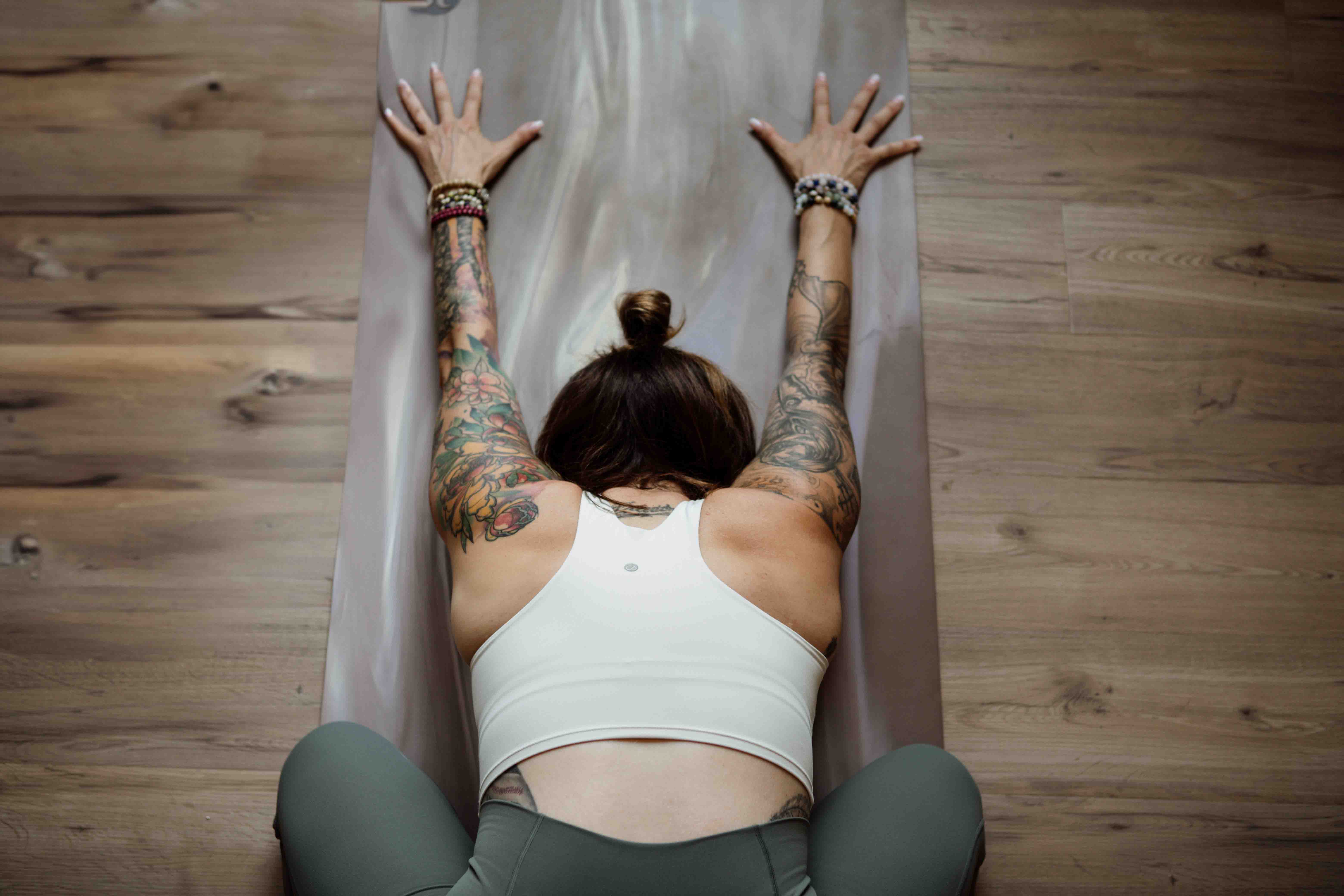
Supported Child’s Pose: Using bolsters or pillows to completely let go.
Legs Up the Wall: A magic pill for heavy legs and a racing mind.
Yoga Nidra: To help rest the brain when sleep isn't happening.
These aren't "lazy" options. They are high-level self-care tools. On low energy days, 10-minute yoga sessions often beat hour-long classes.
Level 2: MEDIUM (Steady)
Focus: Gentle yoga for energy and mobility.
This is the middle ground. You feel okay, but not exactly "superwoman." You have enough energy to move, but you don't want to be drenched in sweat or left feeling depleted.
In perimenopause, your joints might feel stiffer than they used to. This is where yoga for hormonal balance shines. We focus on slow, intentional movement that lubricates the joints and builds gentle heat without overtaxing the adrenals.
What it looks like:
Gentle Sun Salutations: Moving with the breath at 50% speed.
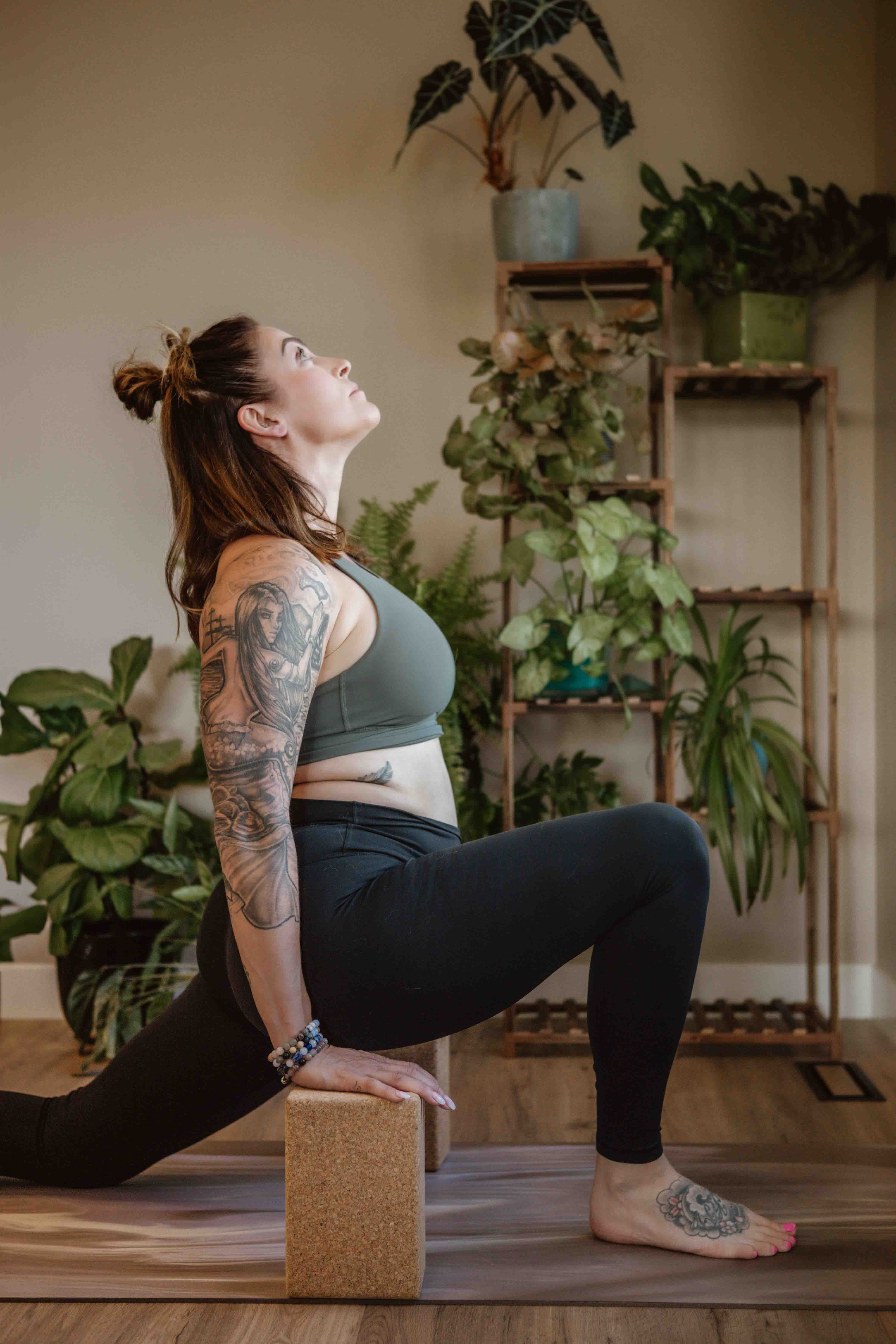
Modified Lunges: Using blocks to bring the floor to you.
Hip Openers: To release the emotional and physical tension that tends to settle in the midsection.
This is where adaptable yoga routines really come into play. You might start a MEDIUM (Steady) practice and realize five minutes in that you’re actually LOW (Rest/Restore/Reset). That’s okay. We modify. We adapt.
Level 3: HIGH (Expand)
Focus: Perimenopause yoga for strength and bone density.
Yes, you will still have high-energy days! And when you do, it is vital to use that energy to build strength. As estrogen declines, our bone density and muscle mass become top priorities.
When your capacity is high, we lean into yoga for menopause that incorporates longer holds, balance challenges, and perhaps even light weights.
What it looks like:
Warrior II and III: Building leg strength and core stability.
Plank Variations: For bone loading in the wrists and arms.
Dynamic Flow: Linking movement to breath to find that "flow state."
On these days, you might even consider combining your yoga with weights to maximize your longevity practice.

Why Adaptability is Your Superpower
The most common mistake women make in midlife is trying to force consistency in an inconsistent body. We’ve been told that "discipline" means doing the same thing every day, regardless of how we feel.
In perimenopause, that definition of discipline is a recipe for injury.
True discipline is having the wisdom to change your plan. It’s choosing yoga modifications for energy levels that shift hour by hour. When you learn to "Capacity Sync," you stop fighting your body and start working with it.
You’ll notice that:
Your recovery time improves.
Your mood stays more stable.
You actually look forward to your mat time because it doesn't feel like another chore.
If you’ve been struggling for motivation, it’s likely because you’ve been trying to force a HIGH (Expand) workout on a LOW (Rest/Restore/Reset) day.
Putting it into Practice: A Simple Guide for Midlife Women
How do you start? It's simpler than you think.
Ditch the rigid calendar. Use it to track your period (if it’s still here), but don't let it dictate your movement.
Keep your props handy. Yoga blocks, bolsters, and blankets aren't just for "beginners." They are tools for adaptable yoga routines that allow you to stay on the mat even when energy is low.
Honor the "Micro-Practice." Sometimes 10 minutes of yoga for low energy days is more effective than an hour of pushing.
Listen to your HRV. If you use a fitness tracker, check your heart rate variability. It’s a great objective way to see if your nervous system is ready for a HIGH (Expand) day or needs a LOW (Rest/Restore/Reset) day. (Check out our post on the HRV connection here).

Your Invitation to Ease
Perimenopause is a transition, not a crisis. It is a time to recalibrate how you care for yourself. You deserve movement that makes you feel capable, not defeated.
If you're ready to stop guessing and start listening to your body’s unique rhythm, I’d love to help you navigate this transition with more ease and less "grind."
Ready to find your rhythm?
Grab our free mini-course, The Perimenopause Energy Reset. It’s designed specifically for midlife women who want to understand their energy fluctuations and find the right movement for every stage of their cycle (however unpredictable it may be).
Visit https://studio.capacityconsciousyoga.com/courses/perimenopause-energy-reset to claim your spot and start moving with your capacity, not against it.
Because you don't need to work harder. You just need to work with yourself.
Comments