


The HRV Connection: Why Your Perimenopausal Brain is Stuck in High Gear

If you're waking up exhausted after a full night's sleep, feeling your heart race for no apparent reason, or simultaneously bone-tired yet unable to relax... you're not imagining it.
Your body isn't broken. It's responding exactly as it should to a massive hormonal shift that's happening behind the scenes. And here's what nobody tells you: the problem isn't your muscles. It's your nervous system.
More specifically, it's the communication breakdown happening between your brain and your heart right now.
The Hidden Connection: How Declining Estrogen Disrupts Your Brain-Heart Conversation
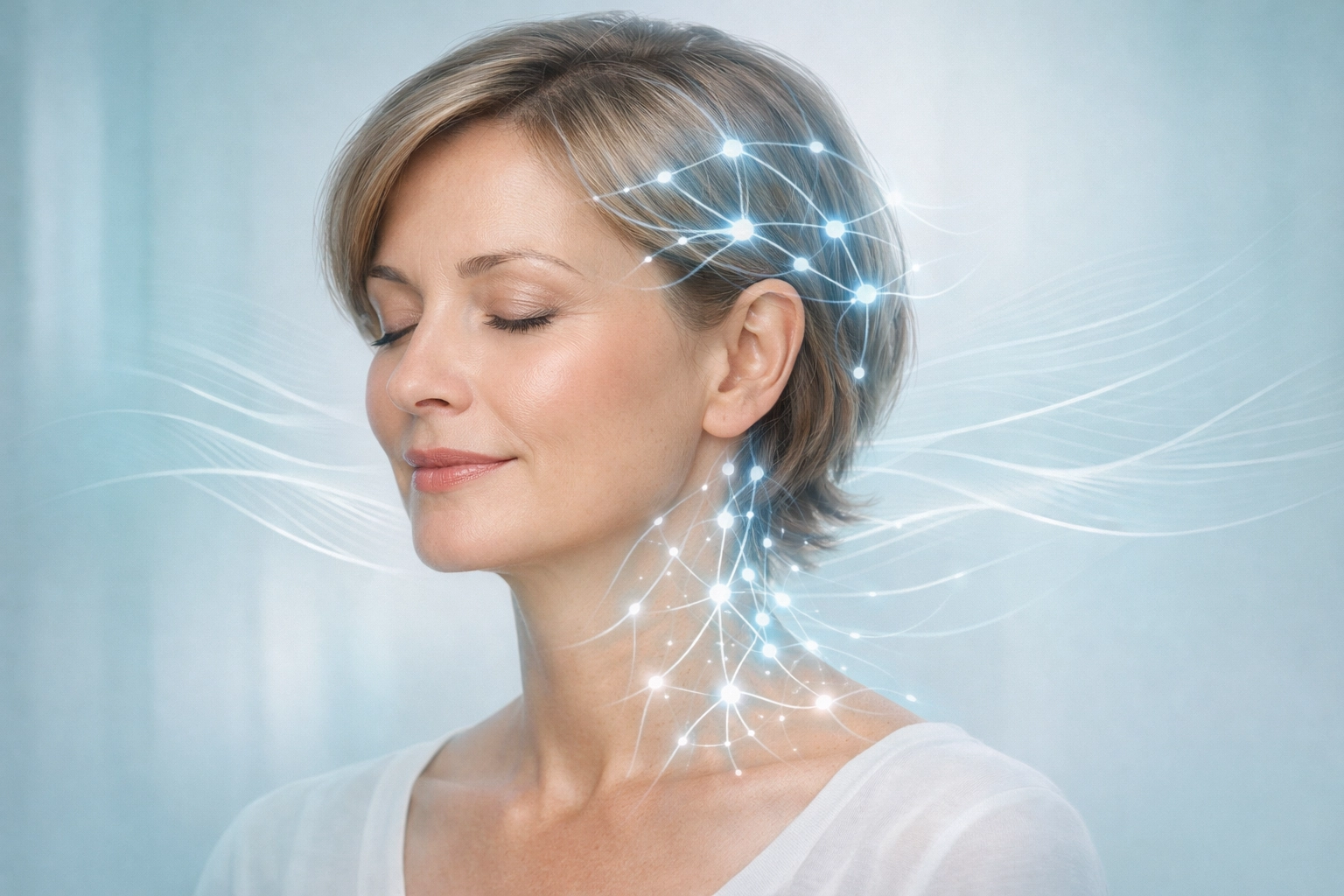
Your heart and brain are in constant conversation through something called Heart Rate Variability, or HRV. Think of HRV as the flexibility in the time between your heartbeats, how quickly your nervous system can shift gears from "go mode" to "rest mode" and back again.
When your estrogen levels are stable, this conversation flows smoothly. Your brain sends signals. Your heart responds. You adapt to stress, then recover. Simple.
But when estrogen starts its perimenopausal decline? That signal gets scrambled.
Estrogen actually plays a crucial role in regulating your autonomic nervous system, the system that controls everything you don't consciously think about, including heart rate, digestion, and stress response. When estrogen drops, your nervous system loses one of its key stabilizers. The result? Your body gets stuck in "high alert" mode, constantly scanning for threats that aren't there.
This is why you feel wired but tired. Your nervous system thinks you're under attack, so it keeps pumping stress hormones even when you're trying to rest. Your heart rate stays elevated. Your brain fog thickens. And no amount of pushing through another intense workout is going to fix it.

Why Your Perimenopausal Body Needs a "Software Update" (Not Another Bootcamp)
Here's the truth most fitness programs won't tell you: your body doesn't need more intensity right now. It needs regulation.
Think of yoga for perimenopause as a software update for your nervous system. Not the kind that demands you upgrade everything at once, but the kind that gently patches the glitches causing all the crashes.
When you practice yoga, especially restorative yoga for fatigue, you're actively training your nervous system to shift out of sympathetic overdrive (that's "fight or flight") and into parasympathetic activation (the "rest and digest" mode your body desperately needs).
This isn't just about relaxation. It's about retraining the actual neural pathways that regulate stress.
Research shows that yoga increases alpha brain waves and enhances interhemispheric coherence, fancy terms that basically mean your brain starts working more efficiently. It alters neurotransmitter production, changes blood flow patterns, and most importantly, it reduces sympathetic activation while boosting your GABA and serotonin levels naturally.
Translation? Yoga gives your nervous system the tools to calm the heck down.
The Problem with "Pushing Through" (And What Actually Works Instead)
Most traditional workouts activate your sympathetic nervous system. That's not inherently bad, it's how you build strength and endurance. But for a perimenopausal body dealing with already-elevated cortisol levels, piling on more sympathetic stress creates what we call "stress debt."
You know that feeling when you finish a workout and instead of feeling energized, you feel like you need a three-hour nap? That's stress debt talking.
Your body is already working overtime to manage fluctuating hormones, disrupted sleep, and the general chaos of midlife. When you add high-intensity workouts on top of that without adequate nervous system recovery, you're not getting stronger. You're getting more depleted.
Yoga for hormonal balance works differently. It gives your nervous system permission to downshift. To repair. To rebuild that crucial HRV resilience that declining estrogen has been quietly eroding.
How Capacity Conscious Yoga Meets Your Nervous System Where It Actually Is
This is where the Capacity Conscious Yoga approach becomes a game-changer.
Instead of asking you to show up at the same intensity level every single day (an unrealistic expectation when your hormones are fluctuating wildly), this method starts with a simple question: What does your nervous system actually have capacity for today?
The Capacity Check In is a quick self-assessment you do before you even roll out your mat. It helps you identify whether you're at LOW, MEDIUM, or HIGH capacity right now, not where you wish you were, or where you used to be, but where you genuinely are in this moment.
LOW capacity days? Your nervous system needs gentle, restorative movement. Yin poses. Longer holds. Breath work that actively triggers your parasympathetic response.
MEDIUM capacity days? You have bandwidth for some gentle flow, but nothing that pushes you into that "fight or flight" zone.
HIGH capacity days? Go ahead and bring in more challenge, but always with the understanding that tomorrow might look different.
This isn't about being lazy or making excuses. It's about understanding that when your nervous system is already maxed out, pushing harder doesn't create strength, it creates burnout.
The Science Behind Why This Approach Actually Works for Perimenopausal Yoga
When you practice perimenopausal yoga that honors your capacity, you're building something researchers call "nervous system resilience." It's the ability to handle stress and recover quickly, your body's bounce-back factor.
In your twenties, that resilience was automatic. Your recovery window was wide. You could power through anything and feel fine the next day.
In perimenopause? That window shrinks dramatically. Your body needs more time to shift out of stress mode, and it needs active support to do it.
Yoga provides that support through:
Breath regulation that directly stimulates the vagus nerve (your nervous system's main "calm down" switch)
Gentle movement that releases muscle tension without triggering additional stress hormones
Mindful awareness that helps you notice stress signals before they spiral
Parasympathetic activation that literally teaches your heart rate to vary more flexibly again
Each practice isn't just about the poses. It's about creating new neural pathways that help your brain and heart communicate more effectively, even as estrogen continues to fluctuate.

What This Looks Like in Real Life
Let's say you wake up after a rough night (hello, 3am wide-awake-for-no-reason club). Your heart is racing slightly. Your brain feels foggy. Your to-do list is already stressing you out.
Old approach: Push through a tough workout because "you need the endorphins."
Capacity Conscious approach: Do a quick Capacity Check In. Realize you're at LOW capacity. Choose a 15-minute restorative sequence that prioritizes nervous system regulation over muscle fatigue.
The difference? After the old approach, you'd likely crash by noon, need extra caffeine, and still not sleep well that night because your nervous system never got the reset it needed.
After the Capacity Conscious approach, your HRV improves throughout the day. Your cortisol levels gradually decline. You actually have energy for the things that matter: and your body trusts that it's safe to relax when bedtime rolls around.
Not harder. Not more intense. Just more supportive.
Your Nervous System Has Been Waiting for This
If you've been struggling with traditional fitness advice that tells you to "just work harder" or "stay consistent" without acknowledging what perimenopause is doing to your body... it's not your fault it hasn't worked.
Your muscles were never the problem. Your willpower isn't lacking. Your nervous system just needs a different kind of support right now: the kind that honors your actual capacity instead of demanding you override it.
Yoga for perimenopause isn't about adding one more thing to your already-full plate. It's about giving your body the software update it's been desperately needing so everything else works better.
Ready to give your nervous system the reset it's been asking for?
Grab the free mini course: The Perimenopause Energy Reset. You'll learn exactly how to use the Capacity Check In system, discover which practices support each energy level, and start building the nervous system resilience that makes everything else easier.
Your body already knows how to heal. Sometimes it just needs the right conditions: and permission( to do it.)
Comments