


Can 10-Minute Yoga Really Help Perimenopause Fatigue? Here's What Your Body Actually Needs

You're dragging yourself through the day. Again. The fatigue isn't just "I need more coffee" tired, it's bone-deep exhaustion that no amount of rest seems to fix. You've heard yoga might help, but honestly? The thought of a 60-minute class feels like climbing Everest when you can barely manage the stairs.
So you're wondering: can 10 minutes actually make a difference?
Here's the honest answer, and it might surprise you.
What the Research Actually Says (And What It Doesn't)
Let's start with what science tells us. Most studies on yoga for perimenopausal symptoms look at longer practices, think 60 to 90 minutes, multiple times per week, for at least 10 weeks. And yes, those longer sessions show real benefits: better sleep, fewer hot flashes, improved mood, less fatigue.
But here's what those studies don't measure: what happens when your body is running on empty and you literally cannot do 60 minutes. What happens when showing up for 10 minutes is the bravest thing you can manage that day.
The research didn't study that. But that doesn't mean it doesn't matter.
The Thing About Perimenopause That Changes Everything
Your body isn't the same as it was five years ago. Your hormones are fluctuating wildly. Your nervous system is more reactive. Your recovery time is longer. Your energy reserves? They're unpredictable at best.
This means the "more is better" approach that worked in your 20s and 30s doesn't just fail, it backfires. Pushing through exhaustion to complete a full yoga class can actually make perimenopause fatigue worse by further depleting your already-taxed system.
What your body actually needs isn't more time on the mat. It's practices that meet you exactly where you are, not where you think you should be.
When 10 Minutes Is Exactly Enough
Sometimes less really is more. Not as a consolation prize. Not as a temporary fix until you can "do it properly." But as the right medicine for what your body needs in that moment.
Here's what 10 minutes of intentional yoga can do:
Reset your nervous system. When you're exhausted, your body is often stuck in sympathetic overdrive, that fight-or-flight state that keeps adrenaline pumping even when you're desperate to rest. Ten minutes of gentle, supported poses sends a clear signal to your nervous system: it's safe to shift into rest-and-digest mode. That shift alone can reduce fatigue in a way that willpower never could.
Break the stress-fatigue cycle. Perimenopausal fatigue often comes with anxiety, racing thoughts, and that wired-but-tired feeling. Short practices interrupt that cycle without overwhelming your already-depleted resources.
Create sustainable consistency. You know what helps more than one 90-minute class you dread? Showing up for 10 minutes three times a week because it feels doable. Consistency beats intensity when you're working with a perimenopausal body.
Why Yin Yoga Is the Secret Weapon for Fatigue
Not all 10-minute practices are created equal. If you're dealing with perimenopause fatigue, active flow classes, even short ones, might leave you more drained. Your body needs the opposite of effort.
This is where yin yoga becomes your best friend.
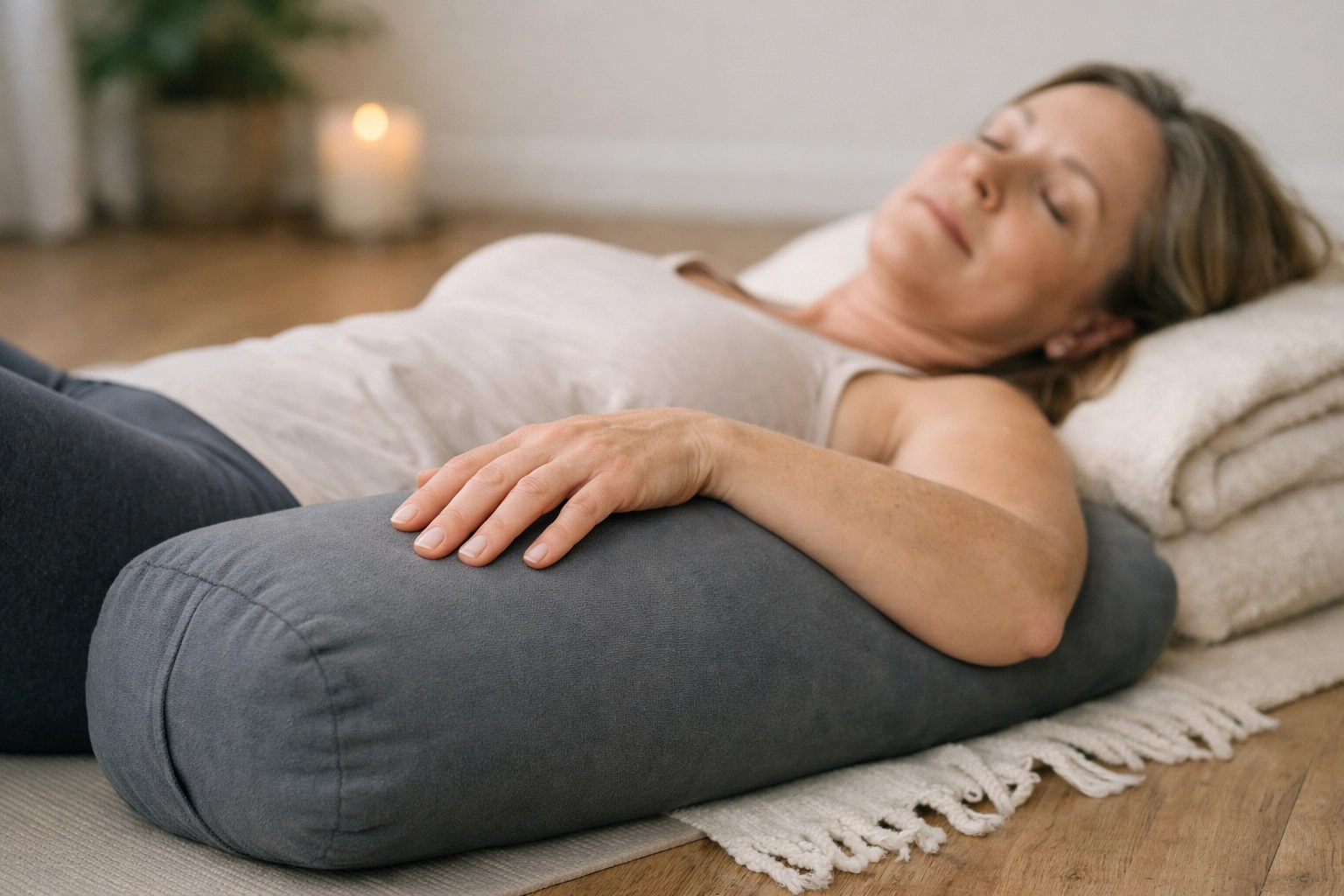
Yin yoga involves holding gentle, supported poses for longer periods (usually 3-5 minutes). You're not stretching hard. You're not building strength. You're allowing your body to soften, your fascia to release, and your nervous system to completely downregulate.
For perimenopausal women, yin yoga offers something crucial: permission to do less. To be still. To stop pushing. To let gravity do the work while you breathe and let your body remember what rest actually feels like.
In just 10 minutes, a well-designed yin sequence can:
Lower cortisol levels
Activate your parasympathetic nervous system
Release physical tension that's been holding stress in your body
Create space between you and the overwhelm
It's not about flexibility or "getting better" at yoga. It's about giving your nervous system the break it's been begging for.
The Capacity-Conscious Approach to Short Practices
At Capacity Conscious Yoga, we've built an entire specialty around 10-minute yin yoga practices specifically because we understand something important: your capacity changes daily.
Some days, you have the energy for a full practice. Other days, 10 minutes is your full capacity, and that's not only okay, it's exactly what honors your body's needs.
Our 10-minute yin sessions aren't "yoga lite" or beginner versions of "real" yoga. They're intentionally designed practices that work with your body's current state, not against it. Each sequence targets the specific ways perimenopause affects your nervous system, sleep, and energy levels.

You get:
Fully supported poses (props are your friends, not crutches)
Clear guidance on what to notice in your body
Permission to modify or skip anything that doesn't serve you
Practices you can do before bed, during a work break, or whenever exhaustion hits
Because here's the truth: the "perfect" yoga practice is the one you'll actually do. And if 10 minutes is what you can manage, then 10 minutes is perfect.
What Your Body Actually Needs (Beyond Duration)
The question isn't really "how long should I practice?" The better question is: "What does my body need right now?"
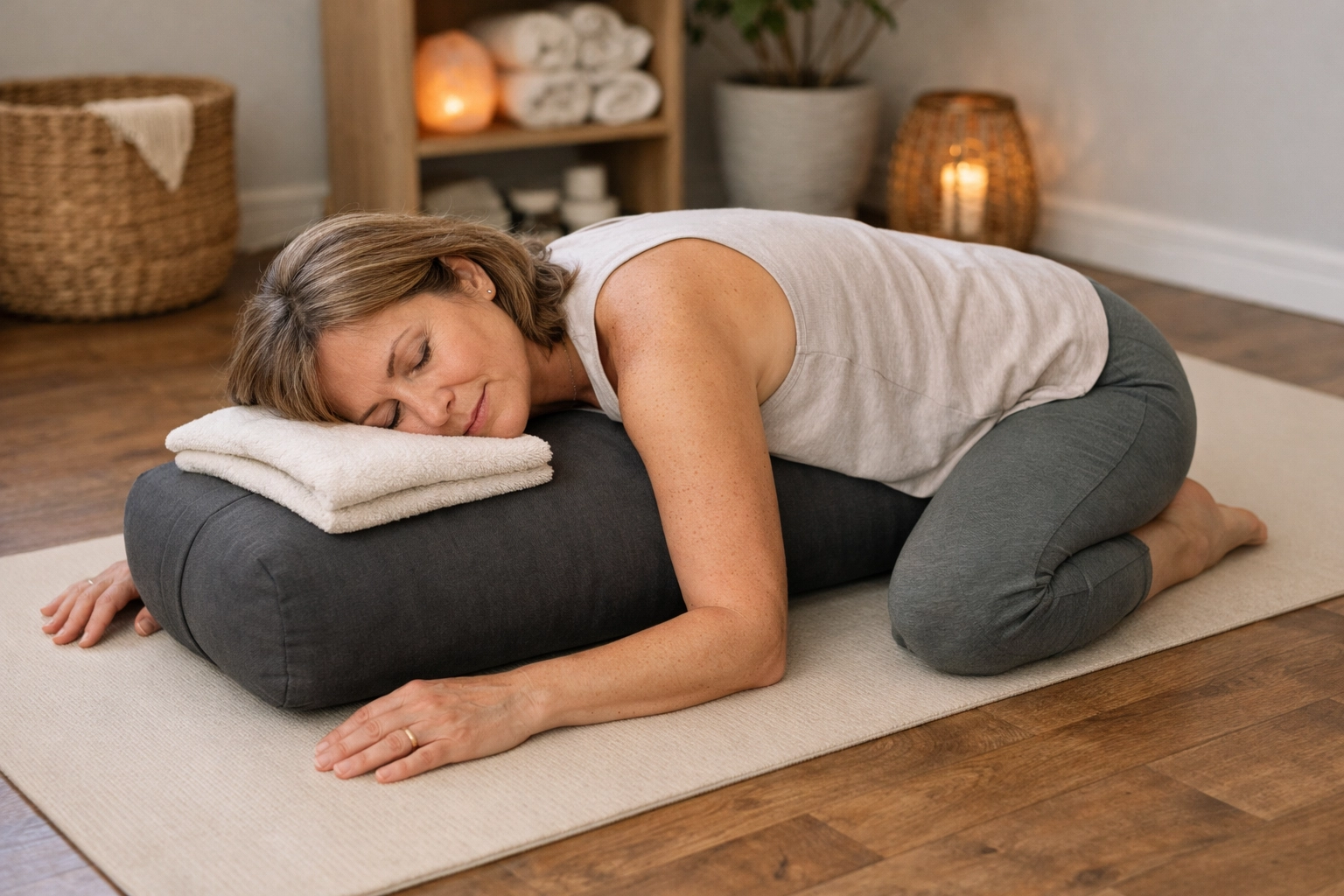
Some days, that's a longer, more active practice. Some days, it's 10 minutes of yin. Some days, it's literally just lying in supported child's pose and breathing.
Learning to read your capacity is more valuable than any specific practice duration. Your body is giving you information all day long, fatigue, tension, brain fog, irritability. Those aren't signs you're failing. They're signs about what your nervous system needs.
When you match your practice to your actual capacity, something shifts. You stop fighting your body and start working with it. You stop feeling guilty about "only" doing 10 minutes and start noticing how much better you feel when you honor what you can actually handle.
The Bottom Line on 10-Minute Yoga and Fatigue
Can 10 minutes of yoga help perimenopause fatigue? Yes: but not in the way you might think.
It won't fix your hormones. It won't replace the longer practices that research shows have broader benefits. But what it can do is give your nervous system a reset when you need it most. It can break the cycle of pushing through exhaustion. It can create a sustainable practice that meets you where you are instead of where you think you should be.
And sometimes? That's exactly what your body actually needs.
The research might favor longer sessions for measurable symptom reduction. But if those longer sessions feel impossible when you're this tired, they're not helping you. Start where you are. Honor your capacity. Ten minutes of yin yoga that you actually do beats sixty minutes you keep avoiding.
Your body isn't broken. It's changing. And it needs practices that change with it: not rigid rules about how long you "should" be on your mat.
Ready to try a practice that meets you exactly where you are? Explore our capacity-conscious approach and discover how 10 minutes can be exactly enough.
Comments