


Yoga for Sleep: How to Lower Your Cortisol Even on Your Highest Stress Days

If you’re staring at the ceiling at 2:00 AM while your mind replays a conversation from three years ago, please know this: you aren't imagining it. And you certainly aren't failing.
If your body feels different lately: more reactive, more easily exhausted, yet somehow unable to settle down when the lights go out: it’s because things are different. For the perimenopausal body, the old rules of "pushing through" don't just stop working. They often start backfiring.
The "tired but wired" phenomenon is a hallmark of midlife. It’s that frustrating state where you are physically drained but your internal engine is revving at 4,000 RPMs. Usually, the culprit is cortisol. Specifically, a cortisol rhythm that has lost its way.
At Capacity Conscious Yoga, we believe that your movement should support your life, not become another item on your high-stress to-do list. Today, we’re talking about how to use yoga to lower those cortisol spikes and finally get the rest you deserve.
The Cortisol Connection: Why Midlife Sleep is... Complicated
During perimenopause, our primary hormones: estrogen and progesterone: begin their erratic dance. As progesterone (our natural "calming" hormone) declines, our resilience to stress often dips along with it.
The result? Your nervous system stays in "high alert" mode much longer than it used to.
When you have a high-stress day at work or home, your body floods with cortisol. In your 20s, you might have burnt that off with a 6:00 PM HIIT class. But now? That high-intensity workout might actually tell your brain that the "danger" is still present, keeping your cortisol levels elevated right until you hit the pillow.
Not helpful. Not restorative. Just more noise in an already loud system.

Introducing the Capacity Check-In
How do you know what your body actually needs? Most of us are taught to look at a calendar or a training plan. We think, "It’s Tuesday, so I have to do a power flow."
We want to invite you to try something different. Something kinder.
The Capacity Check-In is a simple system we use to help you match your movement to your actual internal resources. Before you step on the mat (or even before you decide to step on the mat), you ask yourself one question: What is my capacity today?
LOW Capacity
You’re exhausted. Maybe you didn't sleep well last night, or your brain feels like it’s made of cotton wool. You feel "fragile" or deeply drained.
The Goal: Nervous system regulation and comfort.
The Practice: Restorative yoga, long holds with lots of pillows, or even just 10 minutes of breathwork.
MEDIUM Capacity
You’re doing okay. You have some energy, but you aren't exactly looking to conquer a mountain. You feel steady.
The Goal: Gentle mobility and mindful connection.
The Practice: A slow flow, some standing poses, and a focus on functional movement that feels "juicy" rather than "burning."
HIGH Capacity
You feel vibrant! You slept well, your mood is up, and you actually want to move your body vigorously.
The Guide: Strength-focused yoga, holding poses longer to build heat, or incorporating more challenging transitions.
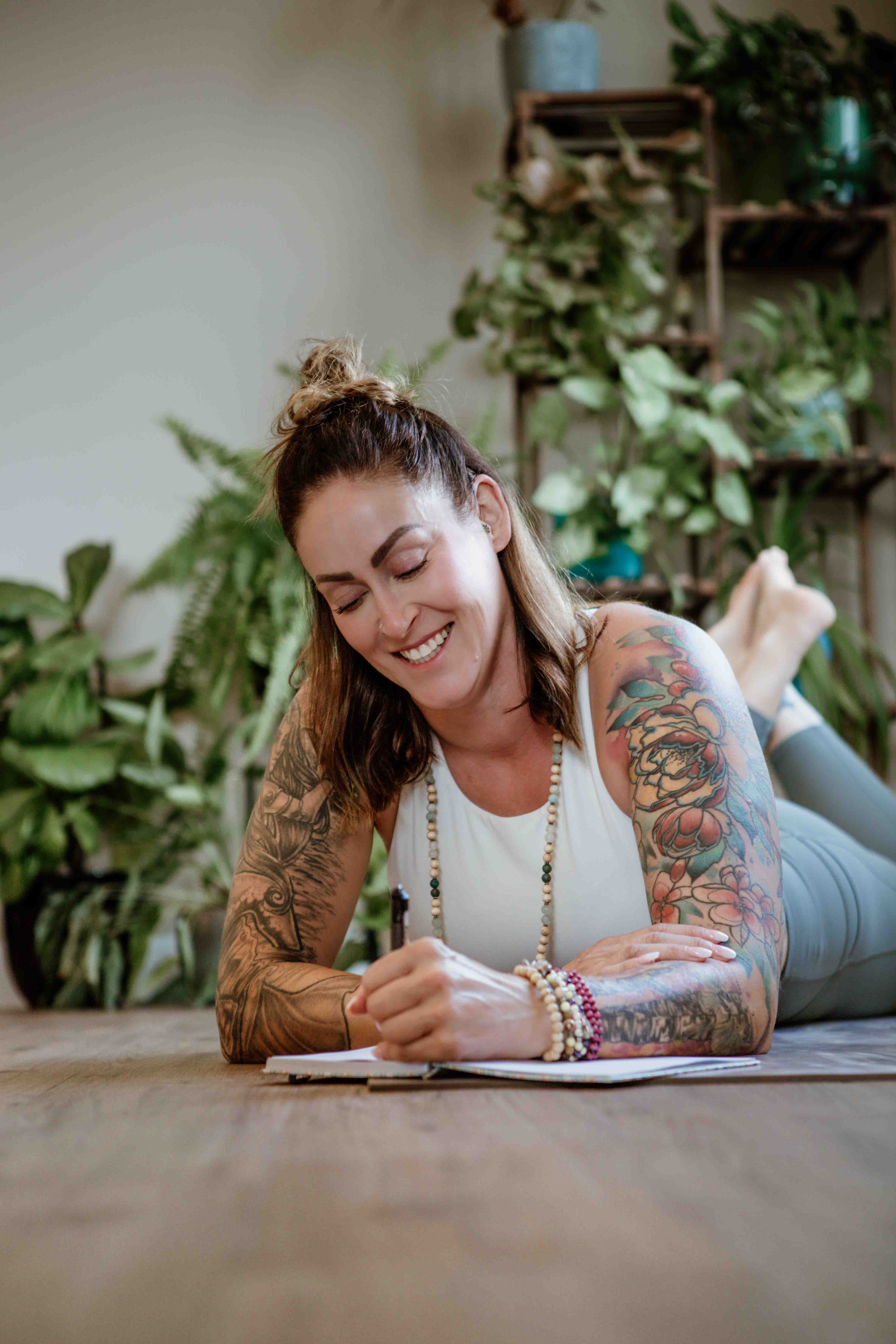
On High-Stress Days, 'LOW' is Your Superpower
Here is the secret that many fitness influencers won't tell you: On your highest stress days, a LOW energy practice is often the most productive thing you can do for your health.
When your cortisol is spiked, your body is screaming for safety. It’s looking for a signal that the "lion" has stopped chasing you. If you force yourself into a high-intensity workout when you are already red-lining, you are just adding more stress to an overtaxed system.
By choosing a restorative, low-capacity practice, you are actively telling your nervous system: "We are safe. We can rest now."
This shift triggers the parasympathetic nervous system: the "rest and digest" response. This is the physiological "off-switch" for cortisol. When cortisol drops, your body can finally produce the melatonin needed for deep, restorative sleep.
The Science Bit
If you've ever wondered whether this "go gentler" approach is actually backed by research ... yes, it is.
A study published in the Journal of Clinical and Diagnostic Research in 2016 found that while regular exercise increased cortisol levels in perimenopausal women, Hatha yoga helped keep cortisol levels more stable and regulated. In other words, the type of movement matters. Especially when your system is already stressed.
That helps explain why a LOW energy practice can support sleep more effectively than pushing through a hard workout on a high-stress day. When your body is already running hot, adding more intensity isn't always the most supportive choice. Sometimes the better option is the one that helps your nervous system settle.
If you're curious, you can read the study here: Journal of Clinical and Diagnostic Research, 2016
Three "Low Capacity" Poses for Better Sleep
You don't need a 60-minute class to change your chemistry. On those days when you're running on empty, try these three shapes. You can even do them in your pajamas.
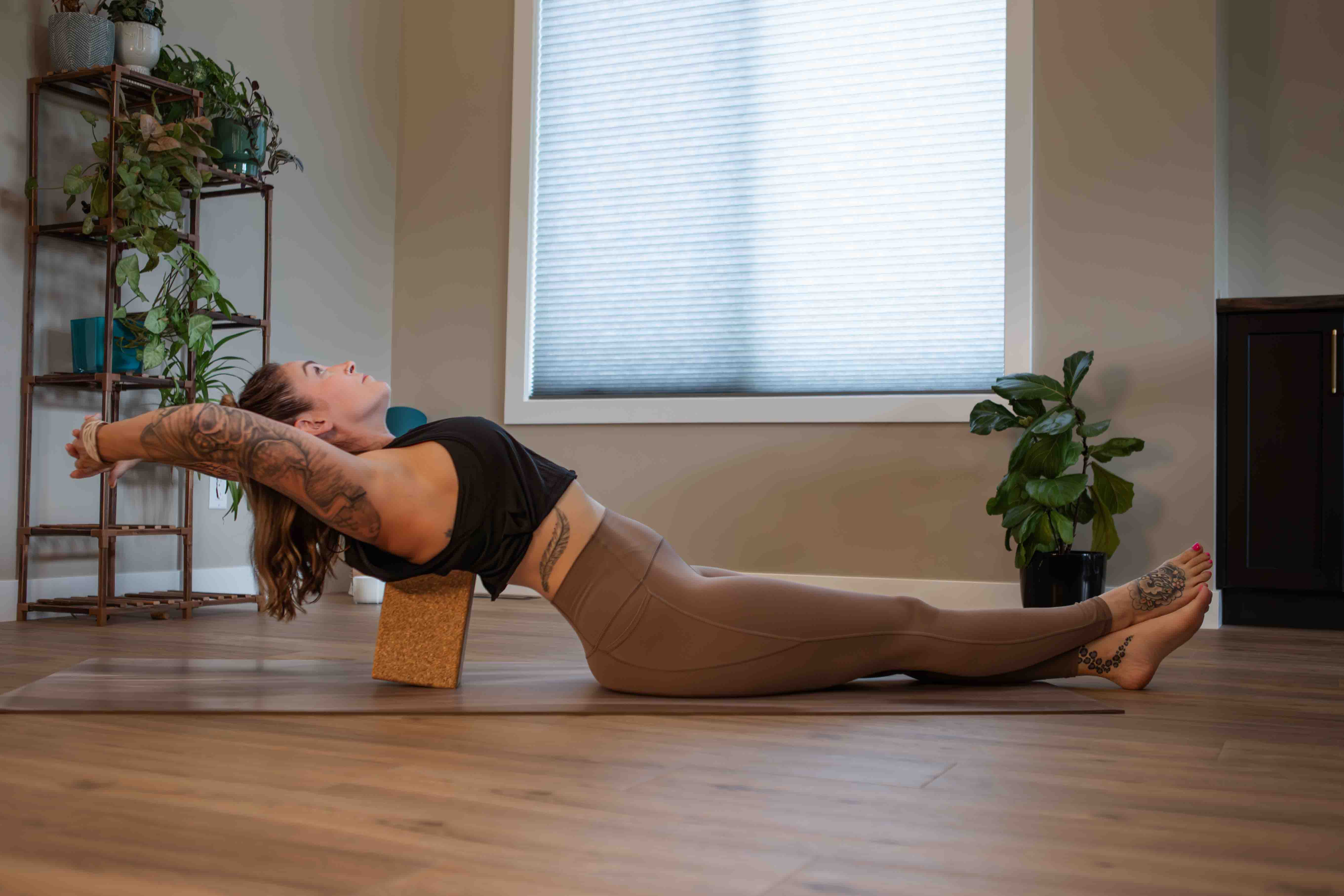
1. Supported Heart Opener
Use a yoga block or a rolled-up towel under your upper back (just below the shoulder blades). Let your head rest back.
Why it works: We spend our stressed days hunched over keyboards or steering wheels. This gentle opening reverses that "protective" posture and helps you breathe deeper into the diaphragm.
2. Legs-Up-The-Wall (Viparita Karani)
Slide your hips as close to a wall as comfortable and swing your legs up. Let your arms rest at your sides.
Why it works: This is the ultimate "reset" button. It encourages lymphatic drainage and calms the heart rate almost instantly. Stay here for 5–10 minutes.
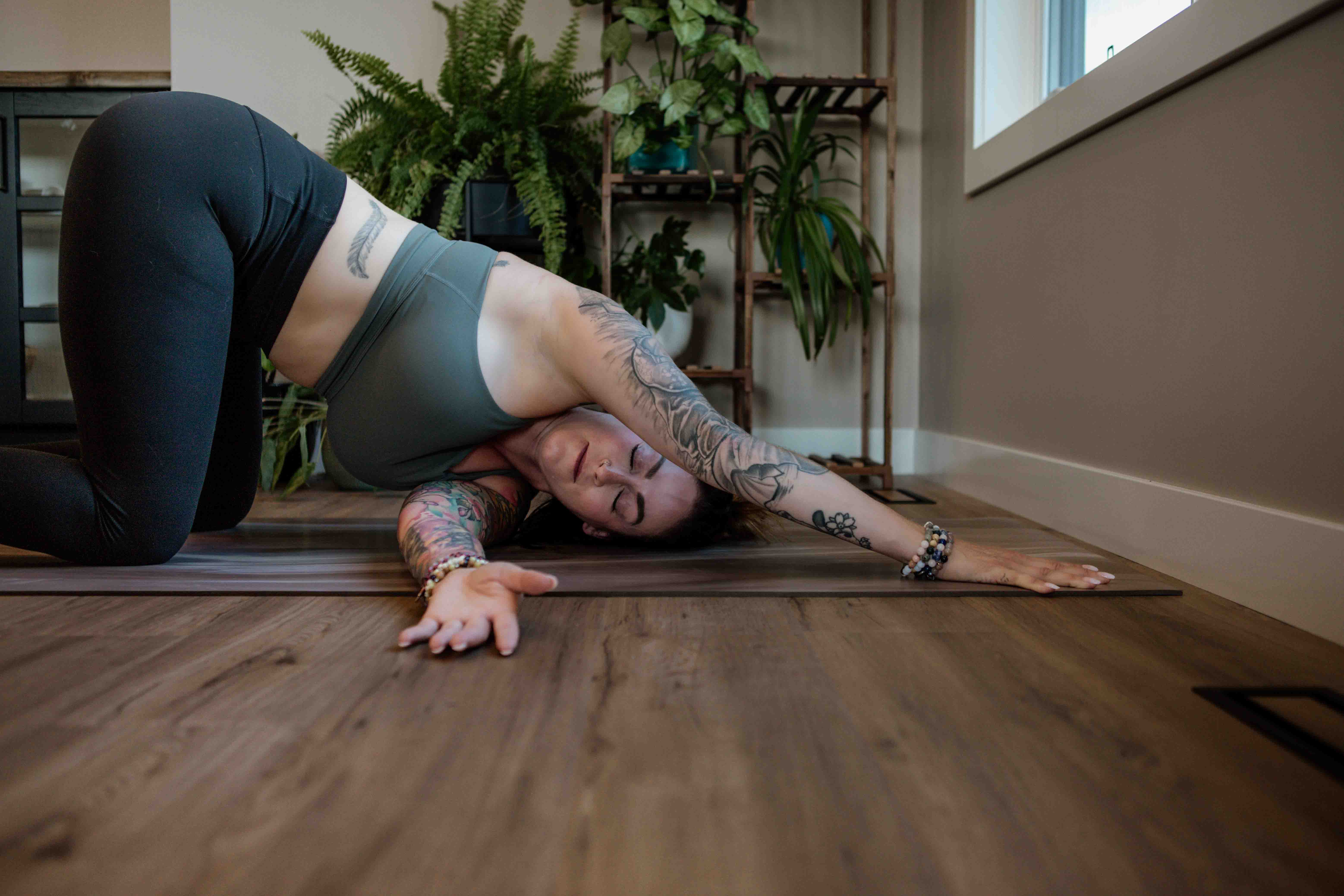
3. Supported Child’s Pose
Widen your knees and place a big pillow or bolster between your thighs. Fold forward and hug the pillow, resting one cheek to the side.
Why it works: It provides a sense of enclosure and safety. It’s a "womb-like" shape that tells the brain the environment is secure.
The "More is Better" Trap
Many women entering perimenopause feel a sense of urgency. They worry about weight changes or bone density, so they try to do more. More cardio. More intensity. More "crushing it."
But if you are struggling with sleep and high stress, more isn't always better. In midlife, the "U-shaped truth" about exercise dose becomes very real. There is a sweet spot where movement supports you, and a cliff where it starts to deplete you.
Yoga for sleep isn't about flexibility. It isn't about how deep you can get into a stretch. It’s about capacity. It’s about meeting yourself exactly where you are: even if where you are is "totally overwhelmed and ready for bed."
Creating Your Evening Ritual
Lowering cortisol is a practice of accumulation. Just 5 or 10 minutes of intentional, low-capacity movement 3–4 times a week can retrain your stress response over time. You’re teaching your body how to settle. You’re building the "muscle" of relaxation.
Next time you have one of those days: the ones where the emails never stopped and the brain fog was thick: don't try to "power through" a workout.
Try this instead:
Check-In: Acknowledge your LOW capacity without judgment.
Dim the Lights: Signal to your brain that the day is ending.
Choose One Pose: Just five minutes of Legs-Up-The-Wall.
Breathe: Long exhales. Slower than your inhales.
This isn't "giving up." It’s strategic recovery. It’s functional fitness for your nervous system.
Ready to stop fighting your body and start supporting it?
If you're tired of feeling drained and want a clear path to reclaiming your energy without the burnout, I’d love to help.
I’ve created a free mini-course specifically for women in this transition. It’s called The Perimenopause Energy Reset. It walks you through how to use the Capacity Scale to build a practice that actually gives back to you, rather than taking more away.
You deserve to feel rested. You deserve to feel capable. Let’s start exactly where you are today.
Curious about how Sarah started Capacity Conscious Yoga? Read more about her journey here or check out our full library of perimenopause-friendly practices.
Comments