


The Real Reasons You're Tired After "Regular" Workouts (And How Capacity Conscious Yoga Can Help)


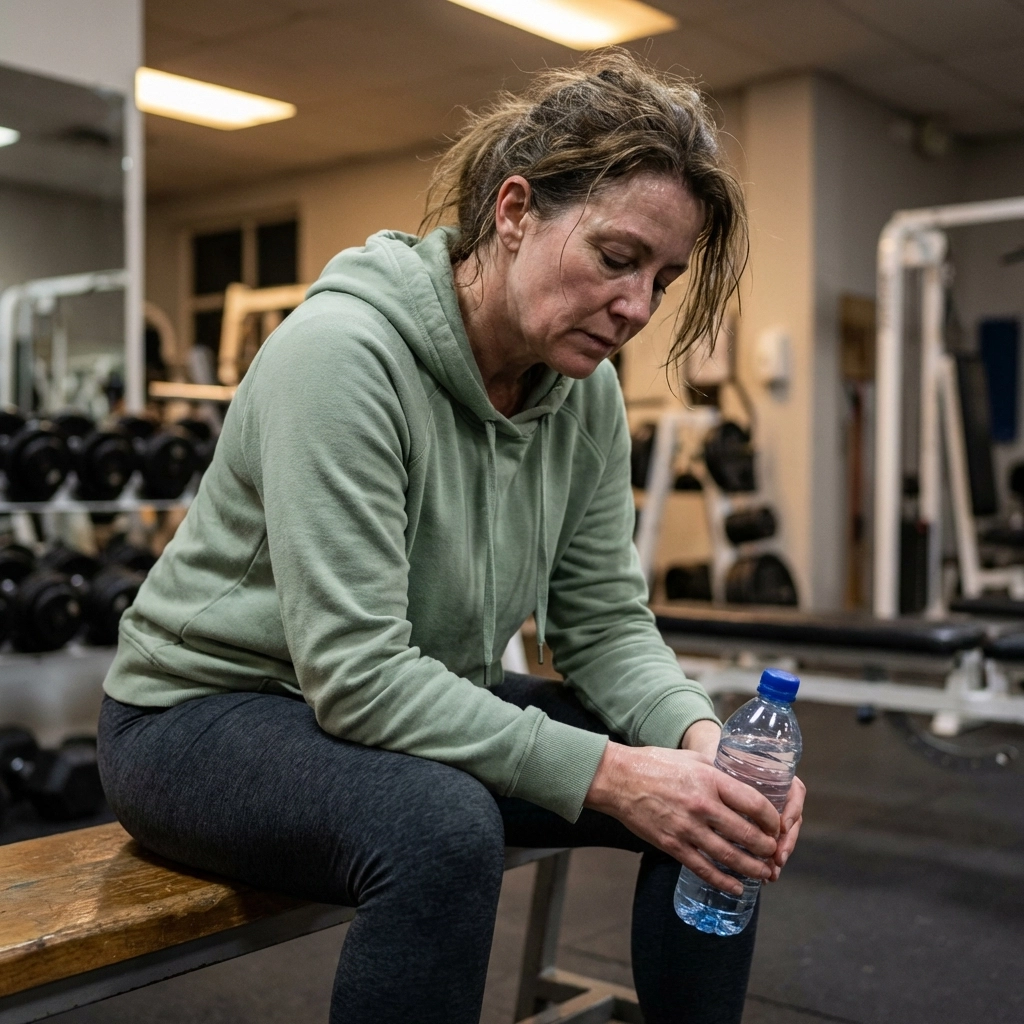
If you've been dragging yourself through workouts like HIIT, cardio, or power flow yoga only to feel completely wiped out afterward, you're not imagining it. And you're definitely not alone.
Many women entering perimenopause notice something frustrating: the same HIIT, cardio, or power flow yoga workouts that used to energize them now leave them exhausted. Not the good kind of tired. The "I need to lie down for the rest of the day" kind of tired.
You might be wondering if you're doing something wrong. If you're just not pushing hard enough. Or maybe you're pushing too hard?
Here's the truth: your body has changed. And the way you move needs to change with it.
What's Really Happening When You Feel Wiped Out
Let's get into the science for a moment, because understanding what's going on inside your body can be incredibly validating.
When you exercise, your body burns through its glycogen stores (that's the glucose stored in your muscles and liver). High-intensity or prolonged workouts deplete these stores quickly, leaving you feeling weak, drowsy, and like you've got nothing left in the tank.
Add to that:
Dehydration from sweating, which forces your heart to work harder and reduces muscle efficiency
Oxygen deficit that causes your body to produce lactic acid as a byproduct
The recovery debt your body accumulates when muscles don't get adequate time to repair
Your body then has to work overtime after your workout to clear that lactic acid, restore oxygen levels, and replenish energy stores. All of that takes... well, energy. Energy you may not have to spare.
Why "Regular" Workouts Hit Different in Perimenopause
Here's where it gets personal.
During perimenopause, your hormones are fluctuating, sometimes wildly. Estrogen and progesterone levels shift, and these hormones affect everything from your energy levels to your recovery time to how your body handles stress.
That HIIT class that used to make you feel powerful? It might now spike your cortisol (stress hormone) and leave you feeling depleted rather than energized.
That long cardio session or power flow class you loved? Your body might need twice as long to recover as it did five years ago.
This isn't weakness. This is biology.
Your perimenopausal body is working hard behind the scenes, managing hormonal shifts, adapting to changes, doing its best to keep you balanced. When you pile on intense physical stress without accounting for that, exhaustion isn't a failure. It's a signal.
A signal that something needs to shift.
The Problem With "Push Through" Culture
We've been taught that good workouts should be hard. That results come from intensity. That if we're not sweating, struggling, or sore, we're not doing enough.
But what if that approach is actually working against you?
For many perimenopausal women, high-intensity exercise creates more stress than their nervous system can handle. Instead of building energy, it drains it. Instead of supporting hormonal balance, it disrupts it.
Not harder. Not more intense. Just more supportive.
That's the shift.

What Capacity-Conscious Yoga Does Differently
Capacity-conscious yoga starts with a radical idea: your body's needs change. Daily. Sometimes hourly.
Instead of following a rigid workout plan that ignores how you actually feel, this approach asks a different question:
What does my body need today?
Not "what should I be able to do?" Not "what did I do last week?" Not "what is everyone else doing?"
Just... what do I need right now?
This is where the Capacity Scale comes in.
Understanding Your LOW, MEDIUM, and HIGH Energy Days
Think of your energy as existing on a spectrum. Some days you wake up and feel ready to take on the world. Other days, getting out of bed feels like an accomplishment.
Both are valid. Both deserve a practice that meets them.
LOW Energy Days
These are the days when everything feels heavy. Maybe you didn't sleep well. Maybe your hormones are doing their thing. Maybe life is just... a lot right now.
On LOW energy days, capacity-conscious yoga looks like:
Gentle, restorative poses
Lots of supported positions (hello, bolsters and blankets)
Slow, intentional breathing
Permission to rest
The goal isn't to "push through" to feel better. The goal is to honor where you are and give your body what it's actually asking for.
MEDIUM Energy Days
You're not exhausted, but you're not firing on all cylinders either. These are the in-between days: and they're more common than we often acknowledge.
On MEDIUM energy days, your practice might include:
Moderate movement with mindful pacing
A balance of effort and ease
Building strength without depleting reserves
Checking in throughout to see how you're doing
HIGH Energy Days
These are the days when you feel good. When movement sounds appealing. When your body has capacity to spare.
On HIGH energy days, you might:
Explore more dynamic flows
Build strength and challenge yourself
Enjoy the energy you have: without overdoing it
Still include rest and recovery
The key? Even on high energy days, you're listening. You're adapting. You're working with your body, not against it.

Why This Approach Actually Works
When you stop fighting your body's signals and start honoring them, something shifts.
You stop dreading movement. You stop feeling like a failure when you can't keep up with yesterday's version of yourself. You start building a sustainable relationship with exercise: one that supports your perimenopausal body instead of depleting it.
And here's the thing: when you give your body what it needs, it often gives back more than you expected.
Rest when you need rest? You recover faster. Move gently on low days? You have more energy for the medium and high days. Stop pushing through exhaustion? Your nervous system calms down, your hormones find more balance, and you actually feel better.
Not despite doing less. Because of it.
The 3-Minute Check-In That Changes Everything
Before every practice, try this:
Pause. Close your eyes. Take three slow breaths.
Scan. How does your body feel right now? Heavy? Light? Somewhere in between?
Ask. What kind of movement would feel supportive today?
That's it. Three minutes. No judgment, no expectations: just honest awareness.
This simple practice helps you choose the right intensity for today's body. Not yesterday's body. Not the body you think you should have. Today's.

What If You're Curious But Not Quite Ready?
That's okay too.
Maybe you're not ready to give up your regular workouts entirely. Maybe you just want to explore what capacity-conscious movement feels like alongside what you're already doing.
You could start small:
Try one gentle yoga session on a day you'd normally push through exhaustion with HIIT, cardio, or power flow
Use the capacity check-in before your next workout to see what your body's actually asking for
Notice how you feel after movement that honors your energy versus movement that ignores it
There's no right way to begin. There's just beginning.
Ready to Try Something That Actually Works With Your Body?
If you're tired of feeling tired: if you're ready for movement that adapts to you, not the other way around: capacity-conscious yoga might be exactly what your perimenopausal body has been waiting for.
Get my freebie: The Perimenopause Energy Reset (a gentle, capacity-conscious way to rebuild energy without burning out).
Start feeling steadier today.
Your body is doing so much already. Your movement practice should support that: not add to the load.
You deserve to feel energized after you move. And with the right approach, you can.
Comments