


Why Everyone Is Talking About ‘Productive Rest’ (And Why Your Perimenopausal Body Needs It)

If your body feels like it’s suddenly speaking a language you don’t understand, you’re not imagining it.
One day you’re fine, and the next, you’re staring at the ceiling at 3:00 AM, wondering why your brain is running a marathon while your legs feel like they’re made of lead. Then morning rolls around, and that little voice in your head, the one that’s been conditioned by decades of "no pain, no gain", starts whispering. Go to the gym. Sweat it out. If you don't crush a workout, you’re being lazy.
But here’s the truth: for the perimenopausal body, "crushing it" is often the very thing that keeps you crushed.
Lately, there’s a buzzword floating around the wellness world: Productive Rest. And while it might sound like an oxymoron (how can doing nothing be productive?), for those of us navigating the hormonal rollercoaster of midlife, it is quite literally the secret sauce to reclaiming our energy.
At Capacity Conscious Yoga, we don’t view rest as a white flag of surrender. We view it as a high-level strategic maneuver. It’s about meeting your body where it actually is, rather than where you think it should be.
The Guilt of the "Un-Crushed" Workout
We’ve been sold a bit of a lie, haven't we? The idea that fitness only "counts" if you’re breathless, dripping in sweat, and slightly miserable. In our 20s and early 30s, our bodies had the hormonal resilience to bounce back from that kind of intensity. We had estrogen on our side, a hormone that, among its many jobs, acts as a powerful protector against muscle damage and systemic inflammation.
As we enter perimenopause, that protective shield starts to thin. Estrogen begins its long, erratic goodbye, and our nervous systems become significantly more sensitive.
When you force yourself into a high-intensity boot camp class on a day when you’re already running on fumes, you aren’t "building discipline." You’re likely sending your cortisol levels through the roof, which tells your body to store fat, stay awake all night, and stay inflamed.
If you've ever felt more tired after a "regular" workout, you know exactly what I’m talking about. It’s not a failure of willpower. It’s a biological mismatch.

What Is ‘Productive Rest’ Anyway?
Productive rest isn't just about collapsing onto the sofa and scrolling through your phone until your thumb hurts (though, let’s be honest, we’ve all been there).
Productive rest is the intentional choice to engage in activities that down-regulate your nervous system and allow your body to repair. It is movement: or stillness: that gives back more than it takes.
Think of your energy like a bank account. In midlife, the "overdraft fees" are much higher than they used to be. Productive rest is the deposit that keeps you out of the red. It’s why micro-yoga beats hour-long classes when you're already exhausted. You are moving with the goal of restoration, not depletion.
The Science: Why Your Hormones Demand a Pause
During perimenopause, our bodies are undergoing a massive internal renovation. This process requires a huge amount of energy. If we’re constantly pouring our limited resources into high-stress workouts, we leave nothing left for the actual work of hormonal transition.
Research shows that mind-body exercises like gentle yoga can significantly improve sleep quality and reduce the "tired but wired" anxiety that plagues so many midlife women. When we slow down, we give our mitochondria: the little power plants in our cells: a chance to repair. We allow our brains to shift out of "fight or flight" and into "rest and digest."
This is where the magic happens. This is where your bone density is supported, your muscles actually recover, and your brain fog starts to clear.

Enter: The Capacity Check-In
So, how do you know when to push and when to pause? How do you distinguish between "I’m a little sluggish and could use a boost" and "If I do one more burpee, I might actually cry"?
At Capacity Conscious Yoga, we use a tool called the Capacity Check-In. It’s a simple, non-judgmental way to audit your physical, mental, and emotional energy before you even step onto the mat.
Instead of following a rigid schedule that doesn't care if you slept two hours or ten, you choose your movement based on three levels:
LOW Capacity: You’re exhausted, stressed, or perhaps nursing a migraine or heavy period. Your goal is 100% restoration. This is where "Productive Rest" shines.
MEDIUM Capacity: You have some energy, but you’re not looking to break records. You want to feel mobile, steady, and present.
HIGH Capacity: You feel great! You’ve got the "oomph" to build strength and push your boundaries a little.
By honoring these levels, you stop fighting against your body and start working with it. You might find that a LOW capacity practice is actually the most "productive" thing you do all week because it prevents a total burnout.
Reframing Rest as a Skill
Rest is not a luxury. It is a physiological necessity, especially now.
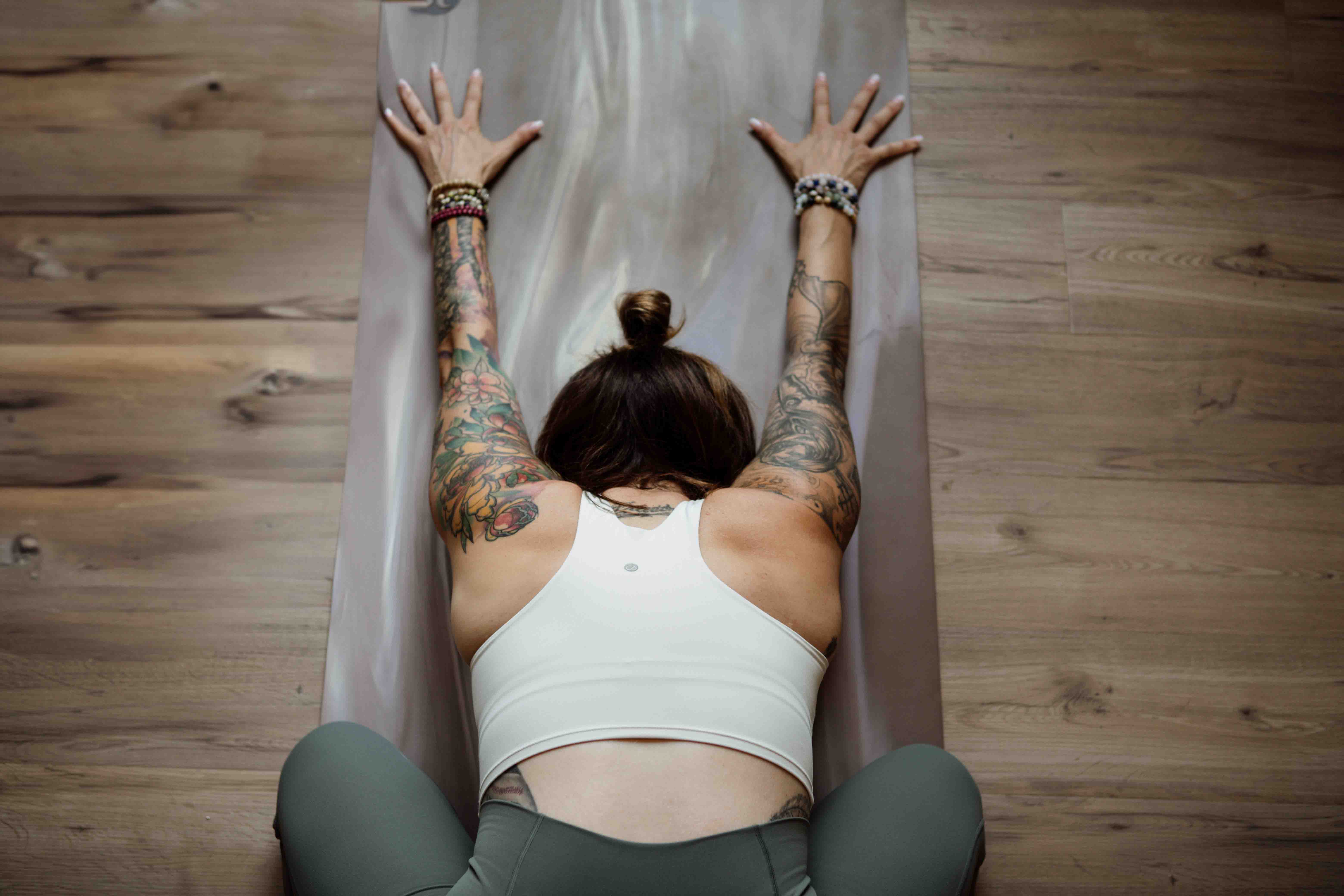
When you choose a supported child’s pose over a power flow, you aren't "skipping" your workout. You are choosing a different kind of intensity: the intensity of listening. You are training your brain to recognize that your worth isn't tied to how much you can endure.
Many women find that once they embrace this capacity-conscious approach, their "High Capacity" days actually become more frequent. Why? Because they aren't constantly digging themselves out of a recovery hole.
If you’re curious about how this works in practice, you might want to look into how to integrate strength and yoga without the burnout. It’s all about balance.
The Power of the LOW Practice
A LOW capacity practice often involves lots of props: blocks, bolsters, blankets: and very little standing. It’s about opening the body without straining it.
Supported Heart Openers: Using a block to gently open the chest can help counteract the "hunching" we do when we’re stressed or tired.
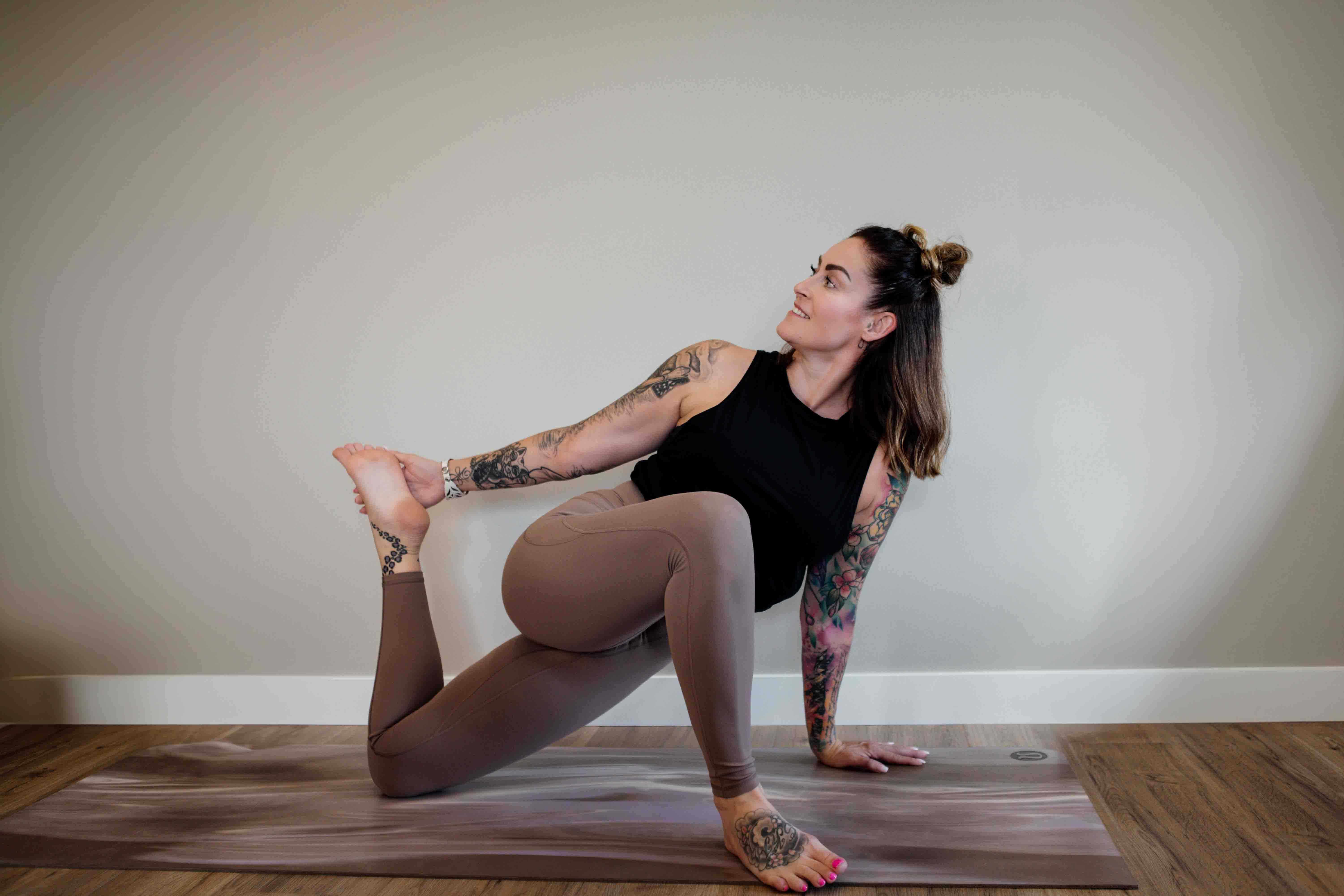
Gentle Twists: These help wring out tension in the spine and support digestion, which can get sluggish during hormonal shifts.
Legs Up the Wall: The ultimate "productive rest" pose for draining fluid from the legs and calming the heart rate.
These aren't "filler" moves. They are targeted interventions for a nervous system that needs a break.
Permission to Pivot
If you take one thing away from this, let it be this: You have permission to change your mind.
You can roll out your mat intending to do a HIGH capacity strength session, get five minutes in, realize your body is saying "not today," and pivot to a LOW capacity rest. That isn't quitting. That is high-level body intelligence.
It’s about functional fitness for daily life, not just for the sake of the workout itself. We want to be strong for our lives, not exhausted by our hobbies.
Ready to Reclaim Your Energy?
If you’re tired of the "all or nothing" approach to fitness and you’re ready to learn how to actually listen to what your perimenopausal body is asking for, I’d love to help you get started.
I’ve created a free mini-course called The Perimenopause Energy Reset. It’s designed specifically for women who are feeling the midlife drain and want a simple, science-backed way to movement that actually builds energy instead of stealing it.
In this blueprint, we dive deeper into the Capacity Scale and give you the exact tools you need to stop the cycle of burnout and start feeling like yourself again.
Remember: your body is doing a lot of work right now. Sometimes, the most productive thing you can do is give it the rest it’s asking for.
Not because you're weak. Not because you've "given up." But because you’re finally listening.

Comments