


The Science of Rest: Why Your Nervous System Holds the Key to Perimenopause Fitness

If your usual workout routine suddenly feels like it's working against you instead of for you, you're not imagining it.
That high-intensity interval class that used to leave you energized? Now it leaves you wired and exhausted at the same time. The strength training you loved? It's started making you puffy, sore for days, and honestly just... off.
Here's what's actually happening: your nervous system is recalibrating during perimenopause, and most fitness plans completely ignore this shift. The result? You're training your sympathetic nervous system (fight-or-flight) when your body desperately needs parasympathetic support (rest-and-digest).
Let's talk about the science your fitness tracker isn't measuring, and why rest days might be the most productive thing you do all week.
Your Nervous System: A Quick (But Important) Primer
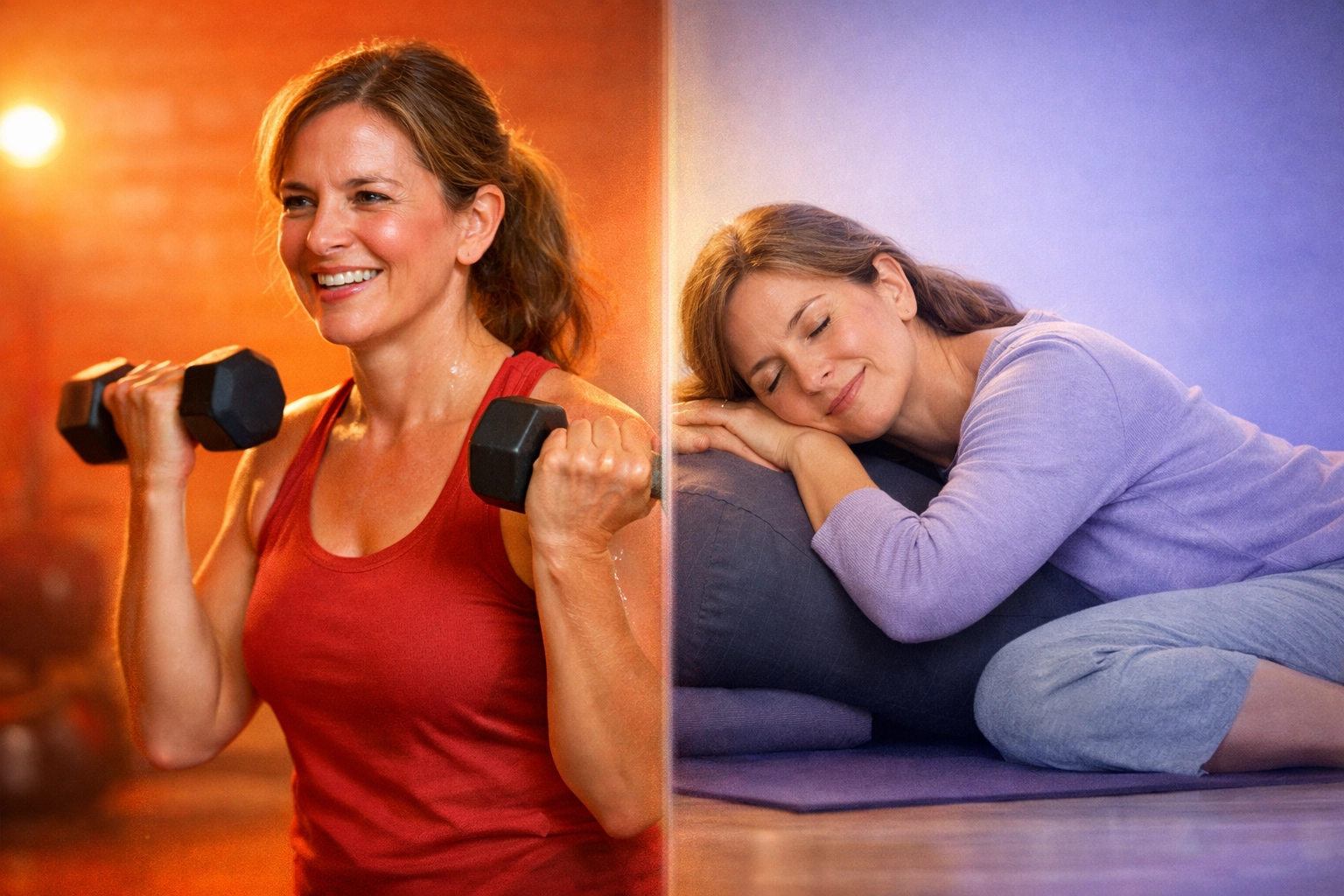
Your autonomic nervous system has two main branches that work like a see-saw:
Sympathetic Nervous System (SNS): This is your accelerator. It activates during stress, exercise, and anything that requires energy output. Heart rate up, breathing faster, muscles primed for action. This is where high-intensity workouts live.
Parasympathetic Nervous System (PNS): This is your brake pedal. It governs rest, digestion, tissue repair, and recovery. Heart rate slows, breathing deepens, muscles relax. This is where restorative yoga and actual fitness gains happen.
In a balanced system, you move fluidly between the two. Push hard, then recover. Stress, then rest.
But perimenopause throws a wrench in this entire mechanism.
How Perimenopause Weakens Your Parasympathetic System
Here's where the science gets interesting (and validating).
Estrogen acts as a natural buffer to cortisol, your main stress hormone. When estrogen drops during perimenopause, cortisol spikes more easily, even from minor stressors like traffic, a work email, or yes, that HIIT workout you thought would help.
Progesterone has a calming, anti-anxiety effect by enhancing GABA, the neurotransmitter that promotes relaxation and sleep. As progesterone declines, your ability to downshift into parasympathetic recovery mode weakens significantly.
Translation: Your internal stress thermostat becomes hypersensitive. What used to feel manageable now feels overwhelming. Your body gets stuck in "high gear" with a faulty brake system.
This hormonal shift directly impacts something called vagal tone, a measure of how well your vagus nerve (the main parasympathetic pathway) functions. Lower vagal tone means poorer stress recovery, disrupted sleep, increased inflammation, and yes, worse fitness results despite working harder.
Why "Pushing Through" Backfires in Perimenopause
Let's be clear: high-intensity exercise isn't inherently bad. But when and how often you do it matters more than ever during perimenopause.
A systematic review published in Cureus found that excessive high-intensity training without adequate recovery can actually worsen perimenopausal symptoms, mood swings, fatigue, sleep disruption, and hormonal imbalance.
Why? Because intense workouts activate your sympathetic nervous system and spike cortisol. When you're already running on elevated baseline cortisol (thanks, declining estrogen), adding more stress without sufficient parasympathetic recovery creates a compounding problem:
Muscle repair slows down, leaving you sore for days instead of hours
Inflammation rises, causing bloating, brain fog, and joint pain
Sleep quality tanks, preventing the deep recovery your body desperately needs
Blood sugar regulation weakens, intensifying cravings and energy crashes
This is overtraining syndrome, and perimenopausal women are uniquely vulnerable to it because hormonal fluctuations have already compromised the parasympathetic system.
You're not getting weaker. Your nervous system is asking for a different approach.
Rest Days Are Where Adaptation Actually Happens
Here's the part that might blow your mind: rest isn't the opposite of training. It's where the actual results happen.
When you strength train, you're creating micro-tears in muscle tissue. When you do intervals, you're depleting energy stores and stressing cardiovascular systems. That's the stimulus.
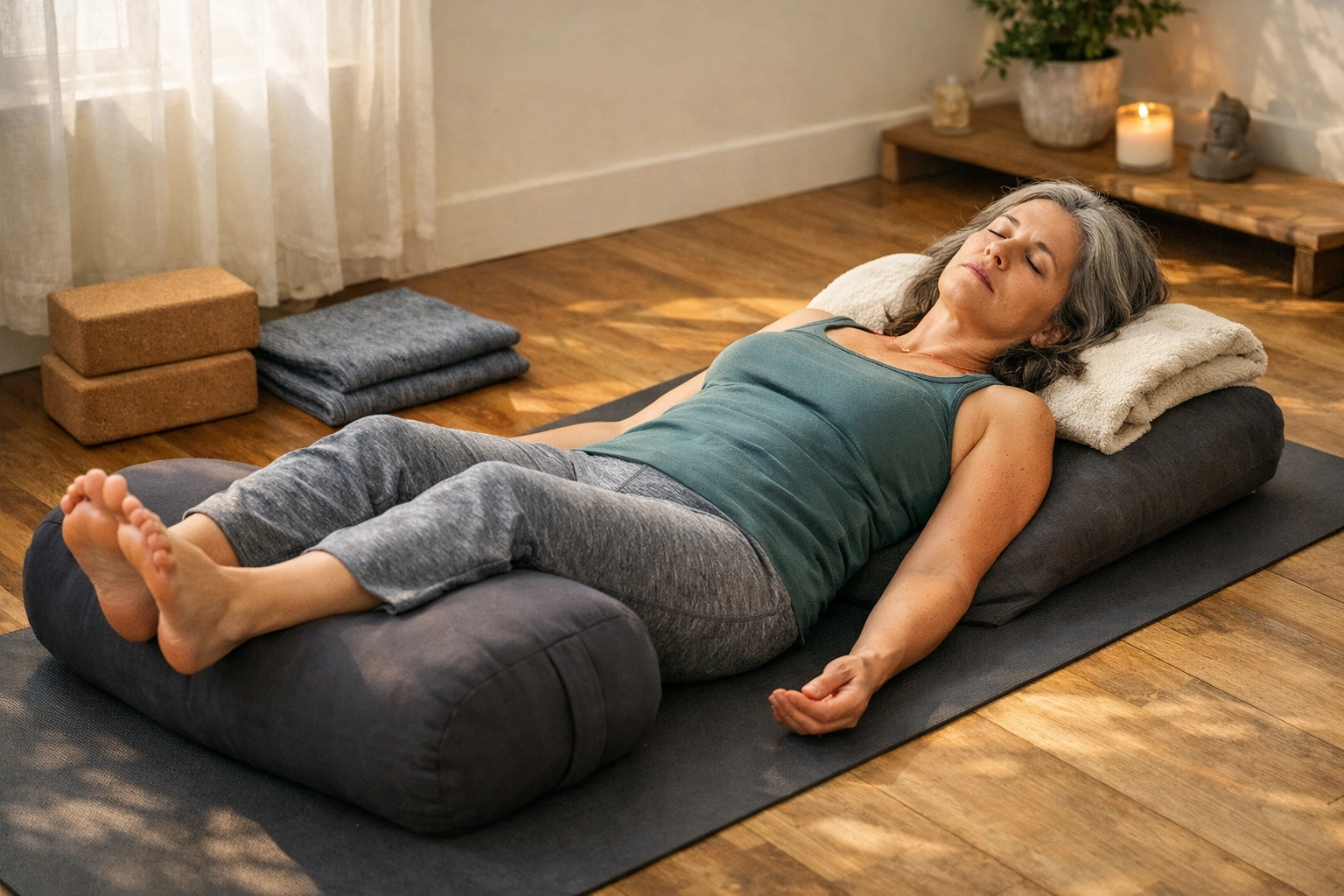
But the adaptation, the part where you get stronger, leaner, more resilient, happens during recovery. Specifically, during parasympathetic-dominant states: deep sleep, gentle movement, and nervous system resets.
A meta-analysis published in the NIH/PMC database found that mind-body exercises like yoga, tai chi, and qigong significantly improve sleep quality, reduce anxiety and depression, and decrease fatigue in perimenopausal women. Why? Because they activate the parasympathetic nervous system and improve vagal tone.
In other words, the gentle yoga session you thought was "just stretching"? It's literally regulating your stress hormones, supporting tissue repair, and improving the quality of your next strength workout.
Rest days aren't lazy. They're strategic.
What Nervous System-Conscious Training Actually Looks Like
So what does this mean for your actual workouts?
Instead of the high-volume, high-intensity grind, here's what supports your perimenopausal body:
On High-Capacity Days:
Lower reps (6–10) with slower tempo for deeper muscle recruitment
Heavier loads that challenge strength without destroying your nervous system
Longer rest periods (60–120 seconds) between sets to allow sympathetic recovery
Shorter sessions (30–45 minutes) focused on quality over quantity
On Medium or Low-Capacity Days:
Gentle yoga flows that emphasize breath and parasympathetic activation
Restorative poses held for 3–5 minutes to support vagal tone
Walking, stretching, or mobility work that moves energy without spiking cortisol
Complete rest when your body asks for it
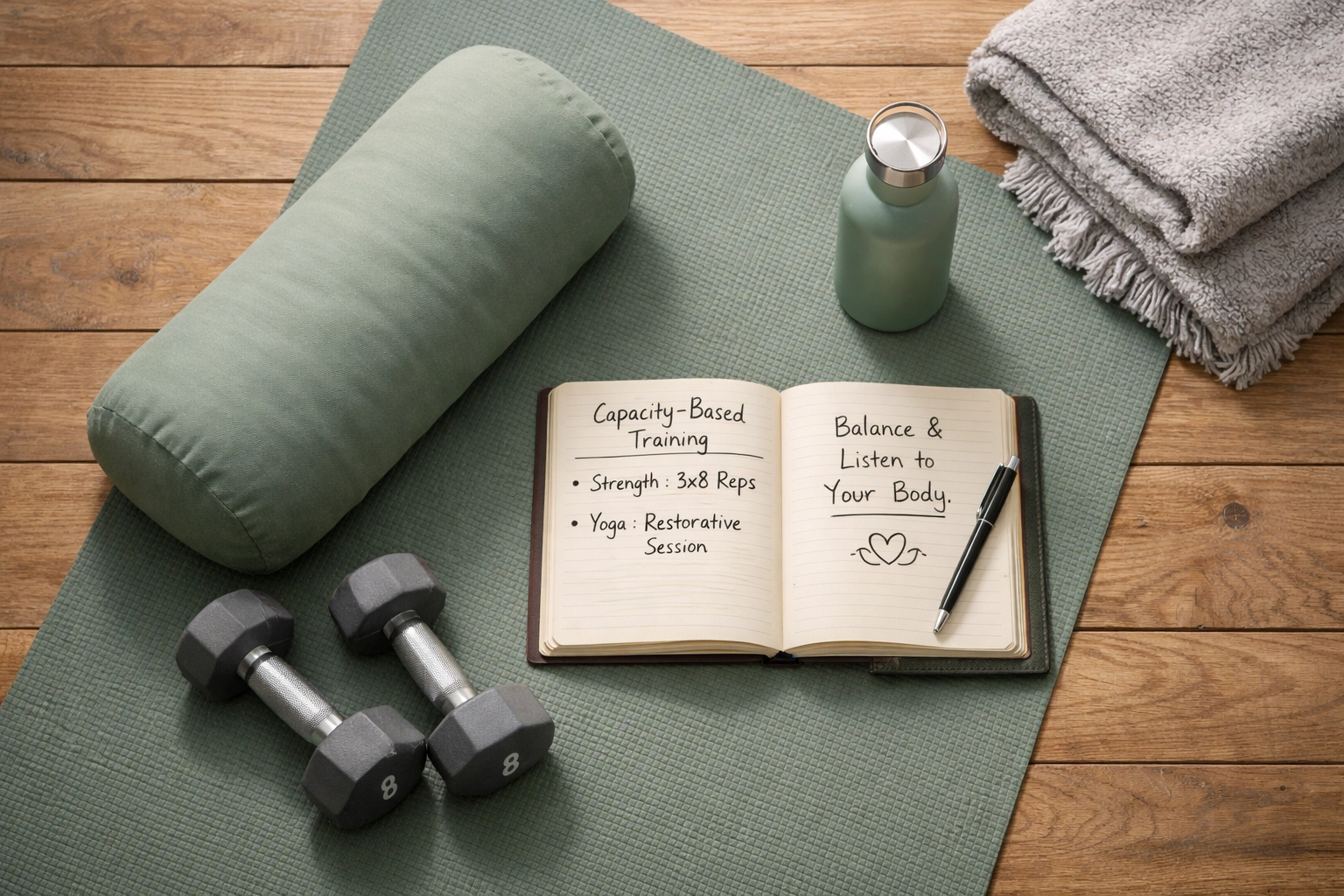
This is exactly what the Capacity Check-In system does: it helps you match your workout to your nervous system state, not some arbitrary calendar plan.
Practical Nervous System Resets You Can Use Today
You don't need fancy equipment or a PhD in neuroscience to support your parasympathetic system. Here are simple resets that regulate your nervous system in under 10 minutes:
Box Breathing (4-4-4-4): Inhale for 4 counts, hold for 4, exhale for 4, hold for 4. Repeat for 3–5 minutes. This activates the vagus nerve and shifts you into parasympathetic mode almost immediately.
Legs-Up-The-Wall Pose: Lie on your back with your legs resting up a wall for 5–10 minutes. Gentle inversion drains lymphatic fluid, lowers heart rate, and signals safety to your nervous system.
Humming or Chanting: The vibration of humming stimulates the vagus nerve. Try humming on your exhale during yoga or breathwork.
Gentle Spinal Twists: Seated or supine twists massage the vagus nerve pathway and support digestion: both parasympathetic functions.
These aren't "woo-woo" wellness trends. They're evidence-based nervous system interventions that work with your perimenopausal physiology instead of against it.
The Bottom Line: Your Body Isn't Broken
If your old workout routine doesn't work anymore, it doesn't mean you've lost your edge or your discipline. It means your hormonal landscape has shifted, and your nervous system is asking for something different.
More isn't better. Harder isn't smarter.
What works now is adapting your training to your capacity: loading your sympathetic nervous system on high-energy days and prioritizing parasympathetic recovery when your body needs it.
Because rest days don't slow your progress. They create it.
Ready to try a fitness approach that actually honors your nervous system? The Perimenopause Energy Reset will teach you how to read your body's signals and match your movement to your capacity: so you can build strength without the burnout.
Your body knows what it needs. It's time your workout routine caught up.
Comments