


Yoga for Hormonal Balance: 5 Restorative Poses to Get You Started

If your body feels different lately, you're not imagining it. The energy shifts, the sleep disruptions, the way your nervous system seems to be running on a completely different operating system than it used to.
Many women entering perimenopause notice that the workouts and routines that used to energize them now leave them feeling depleted. And here's what nobody tells you: this isn't a sign that you need to push harder. It's a sign that your body is asking for something different.
Something more gentle. Something that actually supports where you are right now.
That's where restorative yoga for hormonal balance comes in. Not as another thing to add to your endless to-do list, but as a practice that meets you exactly where you are: whether that's feeling pretty good today or barely scraping by.
Why Restorative Yoga Actually Works for Perimenopause
Here's the thing about your hormones during perimenopause: they're already working overtime trying to find a new equilibrium. Your cortisol levels are fluctuating, your nervous system is more reactive, and your body is craving regulation.
Restorative yoga supports hormonal balance by:
Reducing cortisol levels: those stress hormones that seem permanently elevated during this transition
Stimulating your endocrine glands: the ones responsible for hormone production
Activating your parasympathetic nervous system: your body's built-in relaxation response
This matters because hormonal healing happens when your body feels safe enough to relax deeply. Not when you're pushing through another high-intensity workout, wondering why you feel worse afterward.
Yoga for perimenopause isn't about achieving perfect poses. It's about creating the conditions for your body to do what it naturally wants to do: find balance.
Before You Start: The Capacity Check-In
At Capacity Conscious Yoga, we use a simple system to help you choose the right practice for your body today. Not yesterday. Not what you think you "should" be able to do. Today.
Before each practice, take a moment to check in:
LOW capacity: You're exhausted, stressed, or just not feeling it. Honor that.
MEDIUM capacity: You have some energy but need to be mindful. Meet yourself in the middle.
HIGH capacity: You're feeling good and ready for a bit more. Enjoy it while it lasts.
Your capacity isn't fixed: it changes daily, sometimes hourly. The Capacity Scale helps you build a yoga practice that adapts to you, not the other way around.
Each pose below includes modifications for all three capacity levels. Choose the version that feels right for your body right now.
5 Restorative Poses for Hormonal Balance
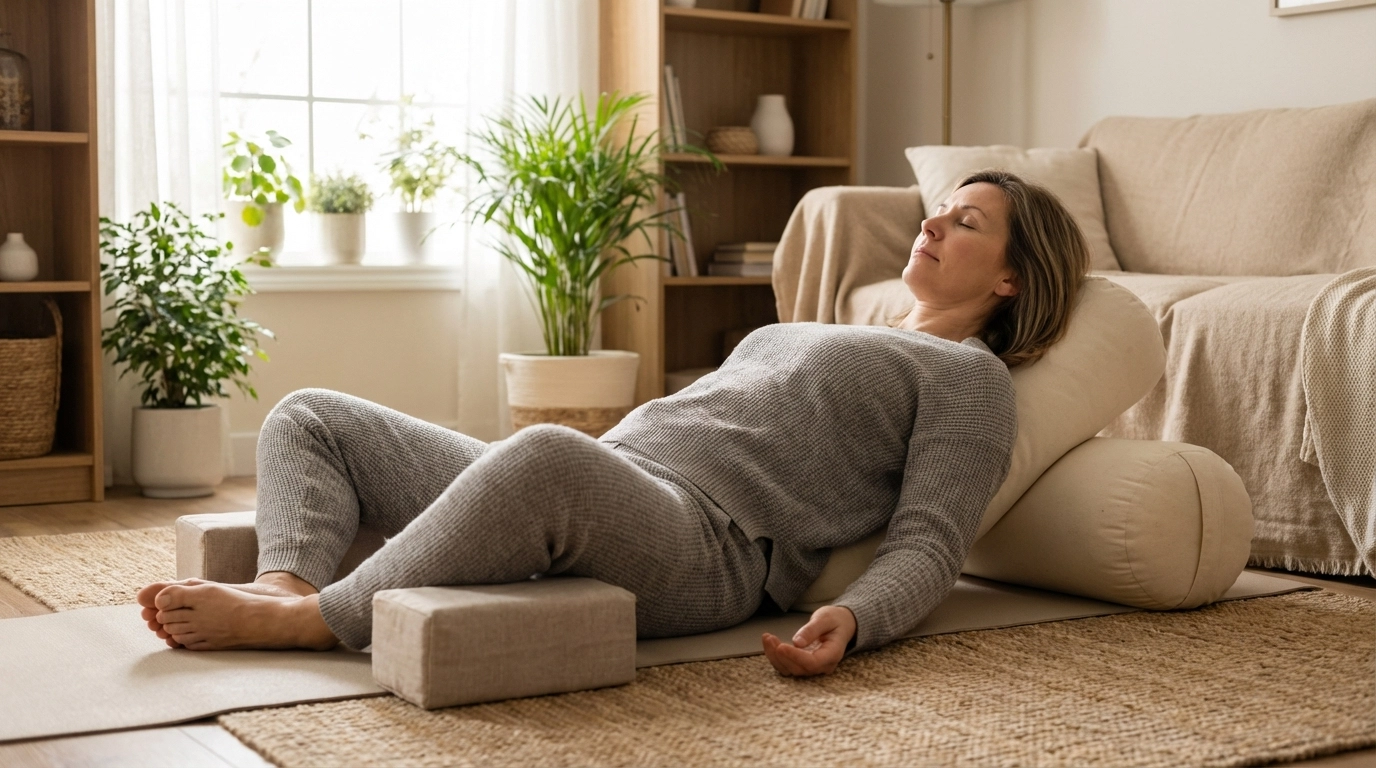
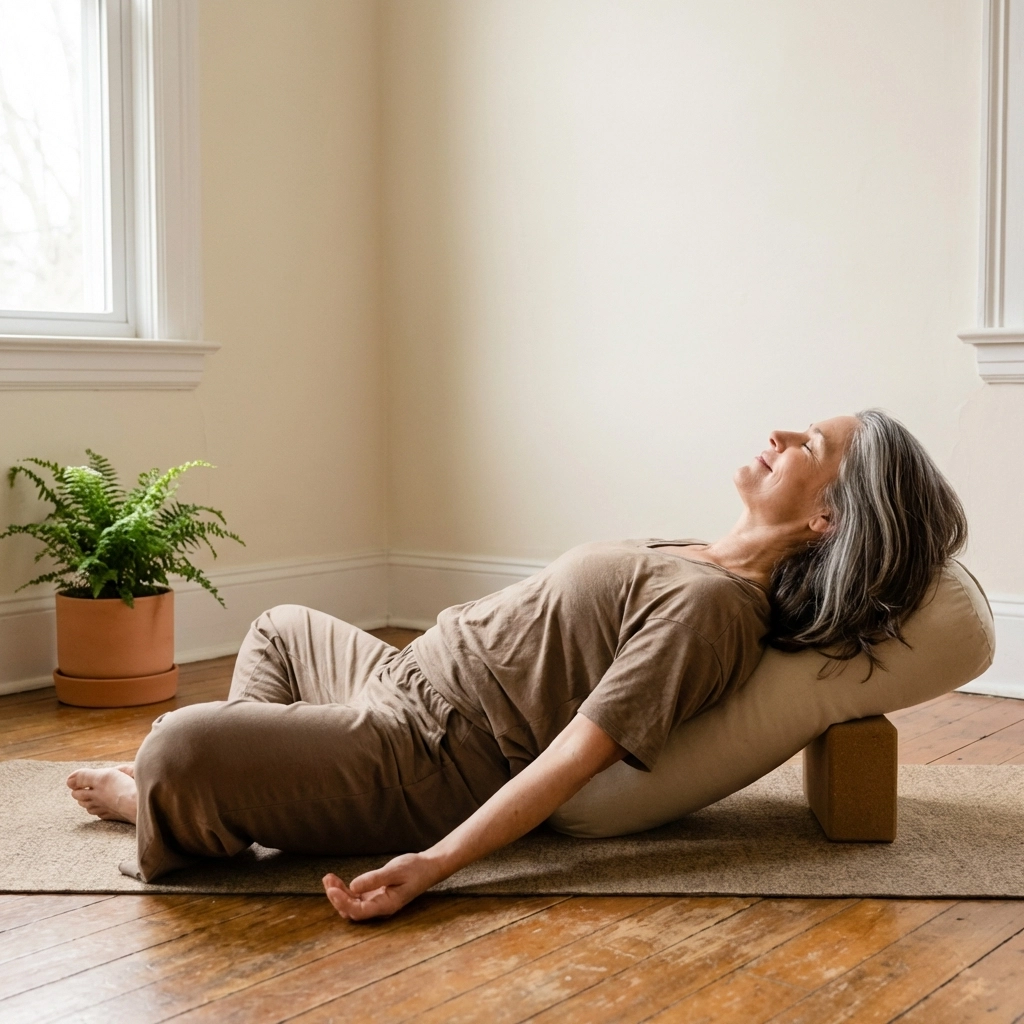
1. Reclining Goddess Pose (Supta Baddha Konasana)
This calming pose opens your hips and creates space for deeper breathing : both essential for releasing tension and supporting your hormonal system. It's one of the most effective poses for yoga for midlife women because it asks nothing of you except to rest.
How to practice:
Lie back on a folded blanket or bolster positioned lengthwise behind you. Bring the soles of your feet together and let your knees fall open to the sides.
Capacity modifications:
LOW: Place blocks or rolled blankets under each knee for full support. Add an eye pillow. Stay here for 5-10 minutes.
MEDIUM: Use lighter support under the knees. Rest your hands on your belly to connect with your breath.
HIGH: Try the pose with minimal props, allowing a gentle opening through the hips while staying relaxed.
2. Surfboard Pose (Prone Savasana)
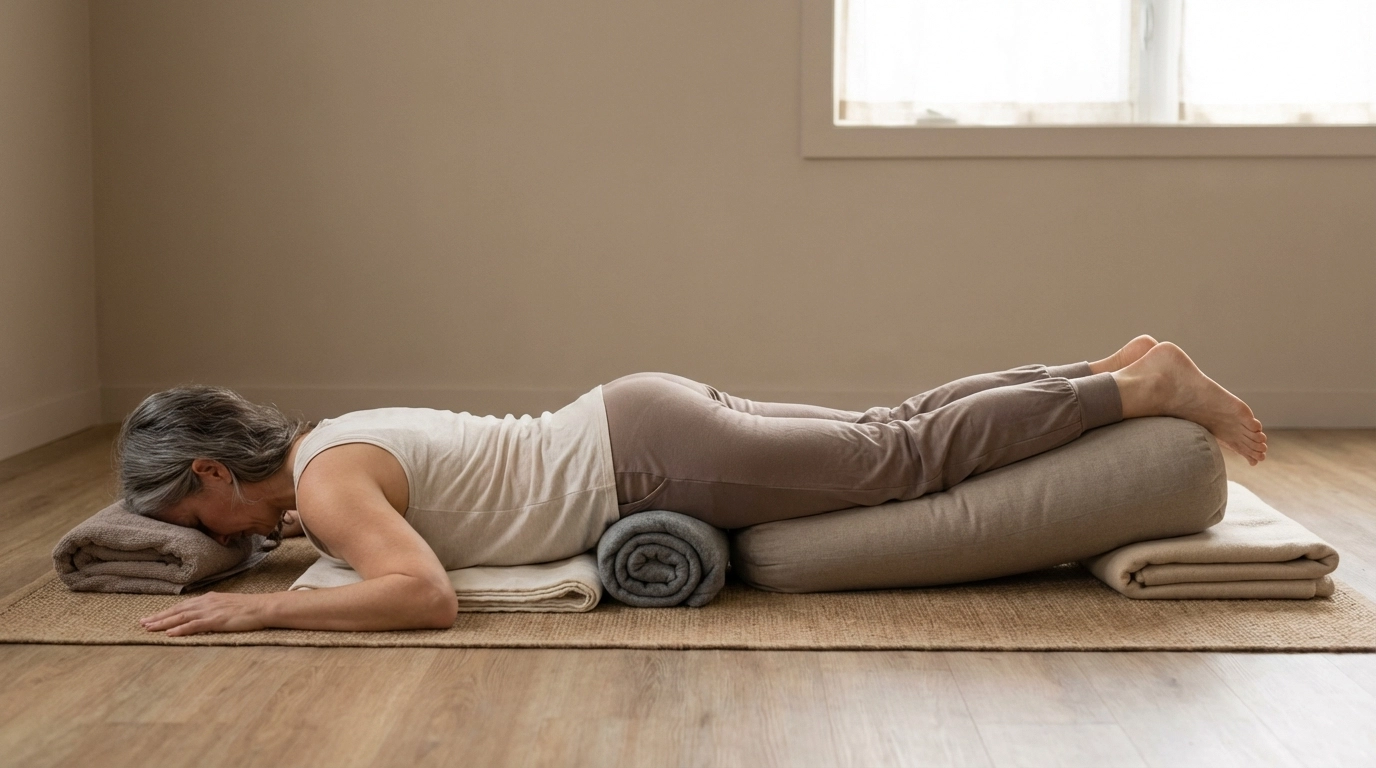
This lesser-known restorative variation releases tension along your entire front and back body. It's especially helpful on low energy days when even lying on your back feels like too much.
How to practice:
Stack two folded blankets lengthwise on your mat. Lower yourself down as if lying on a surfboard, with support from the tops of your thighs all the way to your head. Turn your head to one side (switching halfway through if you'd like).
Capacity modifications:
LOW: Add a rolled blanket under your ankles and forehead support. This is your pose today. No need to do anything else.
MEDIUM: Use moderate blanket support and stay for 3-5 minutes.
HIGH: Try a thinner blanket setup and focus on releasing tension with each exhale.
3. Simple Legs-Up Variation
This pose is a game-changer for restorative yoga for fatigue. Elevating your legs stimulates blood pressure sensors in your neck and upper chest, which can quiet adrenal activity, slow your heart rate, and calm your brain.
How to practice:
Lie on your back with a rolled blanket supporting the space behind your knees. Rest your calves and feet on a stack of blankets, bolster, ottoman, or chair seat.
Capacity modifications:
LOW: Use maximum elevation and support. Place a folded blanket over your pelvis for grounding. Stay as long as you need.
MEDIUM: Moderate leg elevation with blanket support behind your knees.
HIGH: Traditional legs-up-the-wall variation if it feels accessible and comfortable.
This is one of the most effective poses for gentle yoga for energy : counterintuitive as that might sound. Sometimes the most energizing thing you can do is deeply rest.

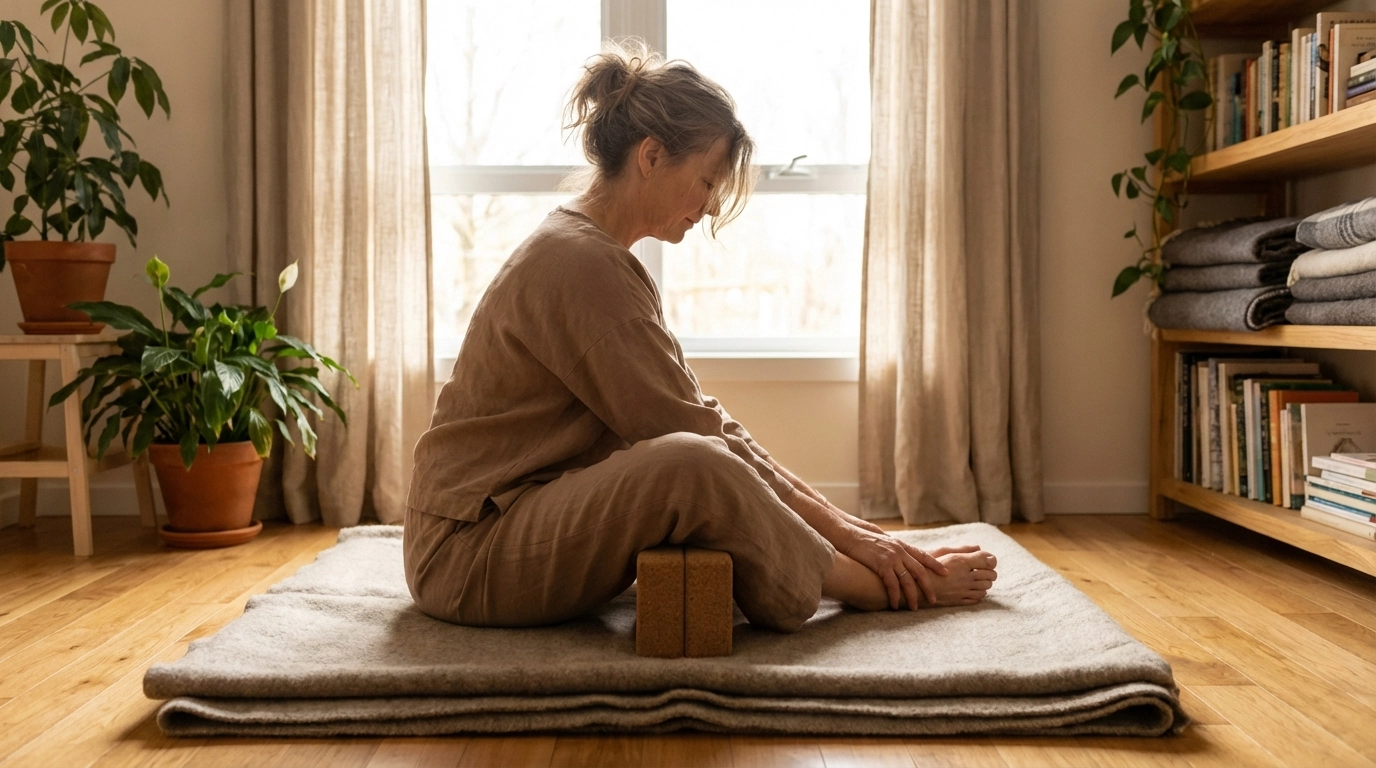
4. Butterfly Pose (Baddha Konasana)
Butterfly pose supports ovarian health, calms the mind, and relieves tension in your pelvic area. It's a cornerstone pose for yoga for menopause and perimenopause because it gently stimulates the reproductive organs while encouraging relaxation.
How to practice:
Sit with the soles of your feet together and let your knees fall open. You can stay upright or fold gently forward, depending on your capacity.
Capacity modifications:
LOW: Sit on a folded blanket to elevate your hips. Place blocks under each knee. Stay upright and simply breathe.
MEDIUM: Light support under knees. Gentle forward fold if it feels good.
HIGH: Explore a deeper forward fold while keeping your spine long and breath steady.
5. Supported Savasana
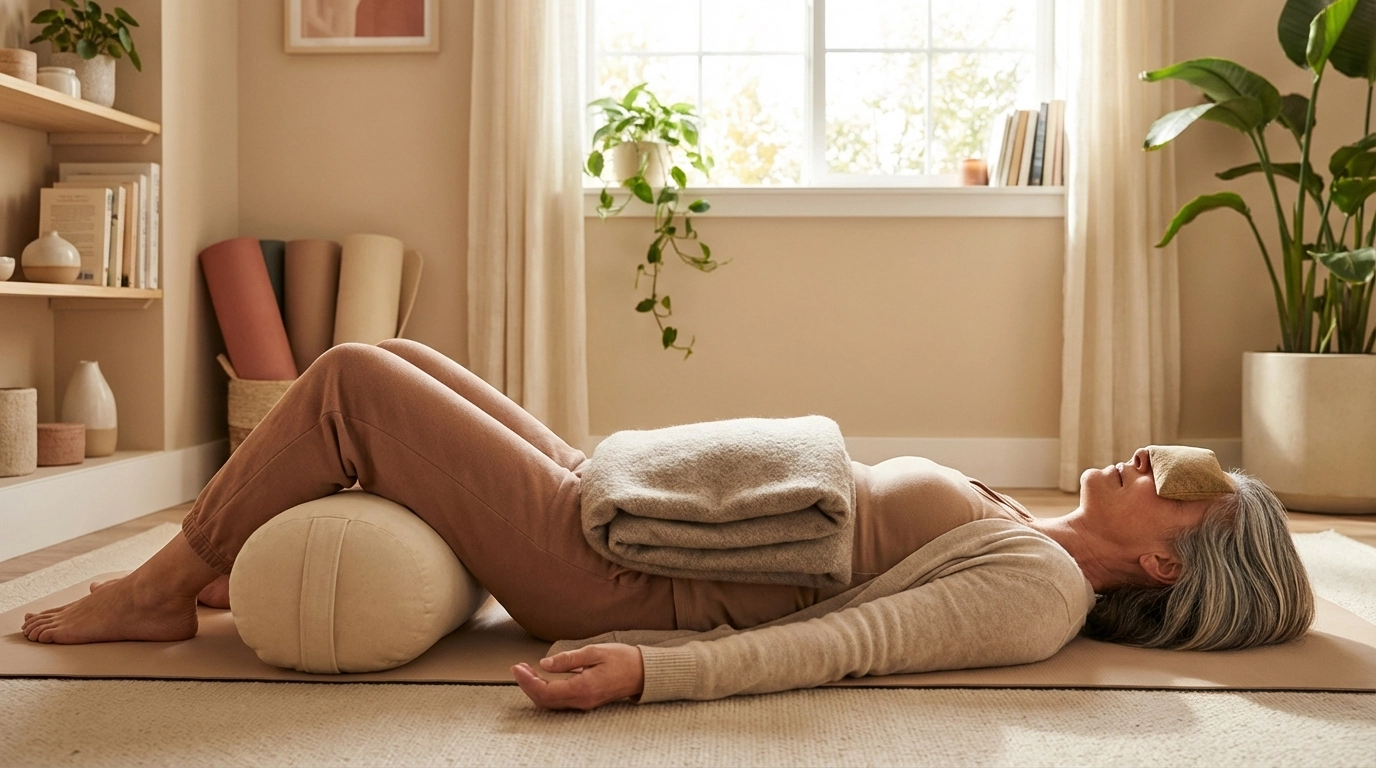
Final relaxation isn't optional: it's essential. This is where your nervous system integrates everything, where hormonal healing actually happens. Savasana balances the nervous system and clears the mind in ways that active poses simply can't.
How to practice:
Lie on your back with a rolled blanket supporting the space behind your knees. Place a folded blanket over your pelvis and belly for grounding. Add an eye pillow if you have one.
Capacity modifications:
LOW: All the props. Eye pillow, weighted blanket, bolster under knees. Give yourself permission to stay here for 15-20 minutes. This is your practice today.
MEDIUM: Moderate prop support. 10-15 minutes of deep rest.
HIGH: Lighter setup, 5-10 minutes, with attention on full body relaxation.
Building Your Adaptable Yoga Routine
The beauty of these poses? You don't need to do all five every day. You don't even need to do them "right."
On a LOW capacity day, maybe you do one pose : Supported Savasana : and call it complete. That counts. That's yoga for low energy days done well.
On a MEDIUM day, you might string together three poses for a gentle 20-minute practice.
On a HIGH capacity day, you could move through all five with fewer props and longer holds.
The point of adaptable yoga routines isn't perfection. It's showing up for yourself in whatever way feels possible today.
What does your body need today?
Not what did it need yesterday. Not what does it "should" need. Today.
Ready to Build a Practice That Actually Works With Your Body?
If you're curious about creating a yoga practice that honors your changing energy levels: one that supports you through perimenopause instead of depleting you, I created something that might help.
The Perimenopause Energy Reset is a free guide designed specifically for midlife women who are tired of feeling tired. It introduces the Capacity Conscious approach and gives you practical tools to start working with your body instead of against it.
No pushing through. No guilt. Just yoga modifications for energy that actually make sense for where you are right now.
Because you deserve a practice that meets you where you are.
Comments