


Nervous System Regulation Matters: Why Calm Movement Beats "Crushing It" in Perimenopause

If your body feels different lately, you’re not imagining it.
Maybe you’ve noticed that your usual "go-to" workout: the one that used to make you feel energized and strong: now leaves you feeling completely wiped out. Or perhaps you’ve been pushing yourself harder than ever, trying to "beat" the weight gain or the brain fog, only to find that your sleep is worse and your fuse is shorter.
It’s frustrating. It’s exhausting. And it’s not because you’re failing.
During perimenopause, the rules of engagement with your body change. The "crush it" mentality that served you in your 20s and 30s can often become the very thing holding you back in your 40s. Because right now, your nervous system isn't just a background player. It’s the director of the entire show.
The Neurological Transition You Weren't Told About
When we talk about perimenopause, we usually talk about hot flashes and missed periods. But there is a massive neurological transition happening under the surface.
Your brain is undergoing a major recalibration. Estradiol and progesterone are potent neuromodulators. This means they don't just affect your reproductive system; they directly impact your serotonin, norepinephrine, and dopamine systems: the chemicals in your brain that regulate your mood, your focus, and your stress response.
Research indicates that perimenopause represents a critical window where the brain is exposed to erratic hormonal fluctuations. These shifts can actually impair GABA receptor function. GABA is the "brakes" of your nervous system. It’s what helps your body return to a state of calm after a stressful event. When those brakes aren't working as efficiently, your stress response stays "on" for longer.

Why the "Crush It" Mentality Backfires
In a "normal" state, a high-intensity workout is a healthy stressor. Your body experiences the stress, adapts, and gets stronger. But in a perimenopausal body, your autonomic nervous system is already a bit destabilized.
Your sympathetic ("fight or flight") response is more reactive than it used to be. When you layer a high-intensity, high-cortisol workout on top of a system that is already struggling to find its baseline, your brain doesn't see a "fitness opportunity." It sees a threat.
Instead of building muscle and burning fat, your body might respond by:
Increasing systemic inflammation.
Pumping out even more cortisol (which likes to hang out around the midsection).
Triggering intense fatigue that lasts for days.
Worsening insomnia because your system is too "wired" to drop into deep sleep.
If you’ve been wondering why you’re so tired after "regular" workouts, this is likely why. You can read more about the real reasons you're tired after workouts here.
The Power of Calm Movement
This is where the shift happens. At Capacity Conscious Yoga, we focus on movement that supports your nervous system rather than taxing it.
Gentle, rhythmic movement: like mindful yoga, walking, or slow strength training: acts as a signal of safety to your brain. It tells your nervous system, "We are okay. We are safe. You can turn off the alarm."
Research has shown that these types of practices can support autonomic balance and may improve Heart Rate Variability (HRV), which is one useful marker of nervous system resilience. The higher your HRV, the better your body is at shifting between stress and rest. By choosing calm movement, you aren't "taking the easy way out." You are giving your system a steadier, more supportive signal.
A couple of helpful examples from the research:
A comprehensive review by Tyagi and Cohen found that yoga practices were associated with increased HRV and vagal tone, both of which are linked with stronger parasympathetic ("rest and digest") activity.(Tyagi A, Cohen M. Yoga and heart rate variability: A comprehensive review of the literature. Int J Yoga. 2016;9(2):97–113.)
In a study of perimenopausal women, Hatha yoga helped stabilize cortisol levels over 12 weeks, while the physical exercise comparison group showed a significant increase in cortisol.(Chaudhuri S, et al. Comparative Assessment of the Effects of Hatha Yoga and Physical Exercise on Biochemical Functions in Perimenopausal Women. BioMed Res Int. 2016.)

Meeting Your Capacity Where It Is
One of the most important tools we use is the Capacity Check In.
Before you step onto the mat or pick up a weight, you ask yourself: What does my body actually need today?
Some days, you might have the energy for a Capacity Conscious strength session. Other days, your system might be so fried that the most productive thing you can do is a supported child's pose.
It’s about honoring the Capacity Scale. When you move in alignment with your actual energy levels, you stop the cycle of burnout. You start to build a sense of nervous system security. This security is the foundation upon which everything else: strength, flexibility, hormonal balance: is built.

How to Start Regulating Your System Today
You don’t need to spend an hour on the mat to see a difference. Nervous system regulation can happen in small, potent doses.
Prioritize the Breath: Techniques like coherent breathing or the 4-7-8 method directly activate the vagus nerve. This is the "on-switch" for your parasympathetic nervous system.
Choose Rhythmic Movement: Think of your movement as a lullaby for your nerves. Slow, intentional transitions in yoga are much more effective for hormonal balance than rushing through a flow.
Check Your Data (With Kindness): If you use an Oura ring or a Garmin, use that data as a suggestion, not a mandate. If your HRV is low, it’s a sign to choose a restorative practice. You can learn more about integrating tracker data here.
Practice "Safe" Strength: We still need to maintain muscle and bone density. But we do it with plenty of rest and without the "burnout" intensity. Check out why Yoga + Weights is the ultimate power couple for this stage of life.

Not Harder. Not More Intense. Just More Supportive.
The transition through perimenopause is a marathon, not a sprint. Your body is doing a lot of hard work behind the scenes to reorganize itself. It deserves your support, not your judgment.
When we stop trying to "crush" our workouts and start trying to nourish our nervous systems, everything changes. The brain fog begins to lift. The "tired but wired" feeling starts to fade. We reclaim our focus and our vitality, not by pushing harder, but by listening more deeply.
If you're ready to stop the cycle of burnout and start a practice that actually meets you where you are, I’d love for you to join us. You can explore Your Practice to see how we blend science and soul to support your midlife journey.
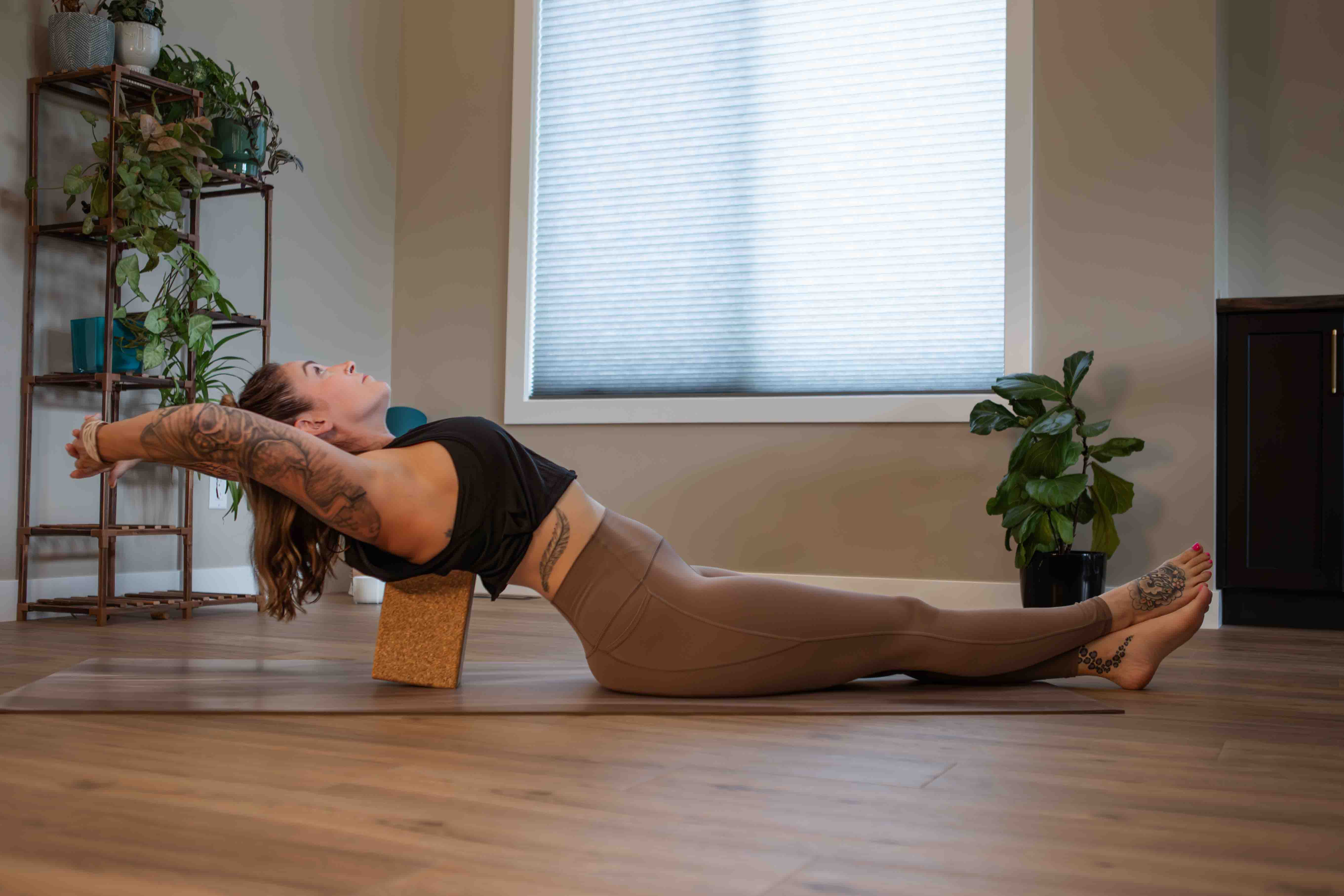
Does your current routine feel like it’s supporting you, or is it just one more thing on your "to-do" list that’s draining your battery?
Maybe today is the day you give yourself permission to do less. To breathe more. To regulate rather than resonate with the stress.
Your nervous system will thank you for it.
Ready to find your flow? Start by taking a look at our Yoga for Hormonal Balance guide and see how good "calm" can really feel.
Comments